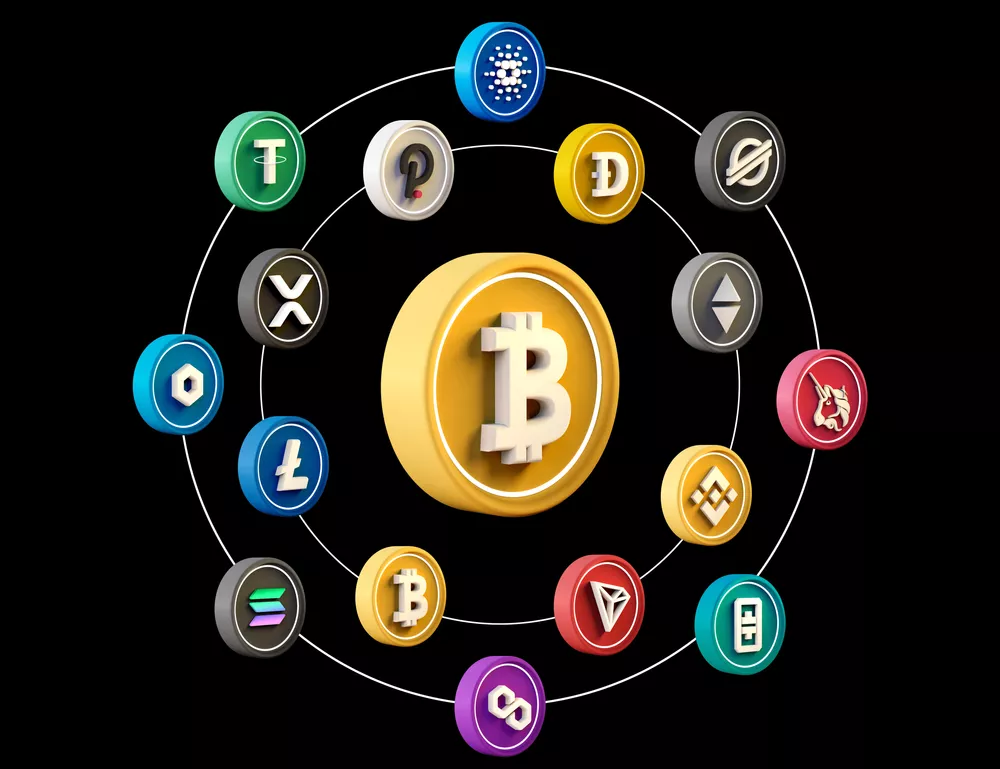





Bitcoin is the first and most well-known cryptocurrency, introduced in 2009 by an anonymous person or group of people using the pseudonym Satoshi Nakamoto. It is a decentralized digital currency that operates on a peer-to-peer network, known as the Bitcoin network, without the need for a central authority like a government or central bank.
Bitcoin is based on blockchain technology, which serves as a public ledger that records all transactions made with the cryptocurrency. The blockchain ensures transparency, security, and immutability of the transaction history.
Key features of Bitcoin include:
Decentralization: Bitcoin operates on a decentralized network of computers, known as nodes. These nodes maintain copies of the blockchain and participate in transaction validation and network consensus.
Limited Supply: Bitcoin has a limited supply of 21 million coins. This scarcity is built into its protocol, and it is achieved through a process called mining, where new Bitcoins are created as a reward for miners who contribute computational power to secure the network.
Mining: Bitcoin mining involves the use of specialized hardware to solve complex mathematical puzzles. Miners compete to find the solution, and the first miner to solve the puzzle successfully adds a new block of transactions to the blockchain and is rewarded with newly minted Bitcoins.
Security: Transactions in the Bitcoin network are secured using cryptographic algorithms. Each user has a pair of cryptographic keys: a private key and a public key. The private key is used to sign transactions, while the public key is used to receive funds. The use of digital signatures ensures the authenticity and integrity of transactions.
Anonymity and Pseudonymity: While Bitcoin transactions are recorded on the public blockchain, the identities of the transacting parties are generally pseudonymous. Users are identified by their Bitcoin addresses, which are alphanumeric strings. However, it is important to note that while transactions are pseudonymous, they can be traced and analyzed to some extent.
Peer-to-Peer Transactions: Bitcoin enables direct peer-to-peer transactions without the need for intermediaries. Users can send Bitcoins to each other using their Bitcoin addresses, regardless of geographical location, and without relying on traditional financial institutions.
Volatility: Bitcoin is known for its price volatility. Its value can fluctuate significantly within short periods due to various factors like market demand, investor sentiment, regulatory developments, and macroeconomic factors.
Bitcoin has gained significant attention and adoption over the years as a store of value, medium of exchange, and investment asset. It has sparked the development of thousands of other cryptocurrencies, collectively known as altcoins, and has influenced the expansion of blockchain technology into various industries beyond finance.


