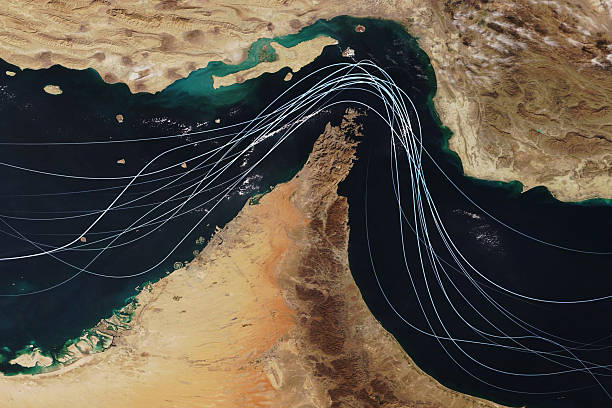

The global economy of April 14, 2026, is currently gripped by a supply-side shock that parallels the most severe energy crises of the 20th century. The catalyst is the ongoing blockade and near-total shutdown of the Strait of Hormuz, the world’s most vital maritime artery for energy transit. With approximately 20% of global oil and liquefied natural gas (LNG) supplies transit through this narrow waterway, the effectively closed chokepoint has sent Brent Crude surging past $120 per barrel. This is no longer a theoretical risk; it is a systemic reality that has triggered a “grocery supply emergency” and an inflationary spiral that is forcing every major economy to reconsider the foundations of its energy security.
The Anatomy of an Inflationary Shock: From Fuel to Fertilizers
The most immediate and visible casualty of the Hormuz crisis is the cost of refined petroleum products. In Nigeria, a country at a critical economic transition point, petrol prices have surged by over 50% to 1,330 Naira per litre, while diesel has climbed to 1,550 Naira. This “fuel shock” is the primary engine of a renewed inflationary pressure that threatens to derail years of fiscal reform. Because Sub-Saharan Africa and parts of Asia rely heavily on refined products from Gulf refineries, the sudden lack of immediate availability has created a deficit that cannot be easily bridged by domestic production or alternative imports.
However, the crisis extends far beyond the gas station. Roughly one-quarter to one-third of globally traded nitrogen fertilizers move through the Strait. The disruption has triggered a “fertilizer-led inflation shock,” sharply narrowing alternative sources for essential nutrients like ammonia and urea. As agricultural producers in India, Brazil, and Southeast Asia face immediate shortages and price spikes, the global food supply chain is braced for a lag-effect spike in prices for cereals and oilseeds. This convergence of energy and food costs is creating a stagflationary environment that poses a direct risk to global social stability.
Supply Chain Fragmentation and the Death of “Just-in-Time”
The Strait of Hormuz crisis has finalized the death of the “Just-in-Time” supply chain model that dominated the early 21st century. Manufacturers in the United Kingdom and the European Union are already imposing surcharges of up to 30% to offset the surging electricity and feedstock costs. In sectors like automotive manufacturing—where components must adhere to stringent specifications—it can take as long as 18 months to find new suppliers. The blockade has forced a transition toward “Just-in-Case” logistics, where companies are prioritizing inventory resilience over cost-efficiency.
For [High-End Logistics] and [E-commerce Security] firms, the challenge has shifted from speed to sovereignty. Global computer chip manufacturers and medical imaging firms are facing shortages of essential gases like helium, which are critical for heat management during production. This has led to a “reshoring” movement, where industries are prioritizing proximity to energy sources and stable trade routes over low-cost labor markets.
The 2026 Energy Pivot: From Moral Positioning to Industrial Survival
If there is a silver lining to the current crisis, it is that 2026 has become the year of “Energy Execution.” The pivot away from fossil fuel dependency is no longer a niche climate project or a moral stance; it is now a matter of industrial and national survival. Governments have moved away from headline-grabbing net-zero declarations toward high-stakes execution tests focused on resilience and competition.
For the first time since 2010, European electricity demand is structurally on the rise, driven by the massive power requirements of AI data centers and the urgent electrification of the industrial core. This has accelerated the deployment of:
-
Sovereign Grids: A trillion-euro infrastructure imperative to connect decentralized, renewable-heavy systems.
-
Hydrogen Corridors: Unlocking dedicated transport routes to convert existing natural gas pipelines.
-
Domestic Manufacturing: A race to build “Gigafactories” for batteries and solar panels to shield economies from recurrent external shocks.
Conclusion: Prosperity in a Volatile World
The Strait of Hormuz crisis of 2026 marks the end of an era of cheap, reliable, and globalized energy. As we watch nations navigate the fallout of 1,330 Naira/L fuel and systemic supply chain collapses, the blueprint for the next decade is being written. Success in this new era belongs to the “Resilient”—those who can decouple their growth from volatile global chokepoints and secure their own energy backbones.
For the modern enterprise, the lesson is clear: energy security is now the primary lever of economic policy. The projects that move fastest in 2026 will be those that combine cleaner, domestically produced energy with a compelling local story of air quality and bill stability. In a hotter, more volatile world, the energy pivot is the only path to lasting prosperity