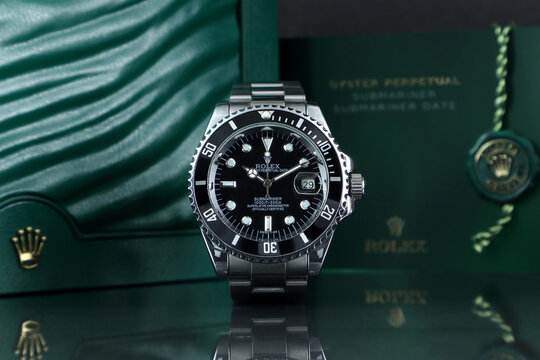

As the global economy traverses the second quarter of 2026, the luxury sector is witnessing a collision between heritage craftsmanship and the frontier of digital economics. The catalyst for this conversation is the centennial celebration of the Rolex Oyster, a milestone that has seen the Geneva-based giant tease its most significant release in a generation. While the horological world waits with bated breath for a physical masterpiece, the broader business community is focused on a more complex phenomenon: the “Luxury Watch Paradox.” In an era defined by the infinite reproducibility of digital assets through generative AI, Rolex is providing the definitive blueprint for creating “Digital Scarcity”—a strategy that ensures value is maintained even when the product’s likeness can be replicated a billion times over.
The Erosion of Rarity in the Age of Generative AI
The central challenge of the 2026 digital landscape is the collapse of traditional rarity. With the maturation of high-fidelity AI modeling, the visual and conceptual “soul” of a product is no longer exclusive. Anyone with a mid-range neural processor can generate a photorealistic rendering of a luxury timepiece that is indistinguishable from the original to the naked eye. This democratization of imagery has threatened to commoditize luxury, as the “look” of a brand no longer commands the premium it once did. Rolex, however, has countered this by shifting the definition of value from the image of the object to the provenance of its existence.
This shift has created a massive demand for [E-commerce Security] and authentication frameworks. For the international market, the lesson is that in a world of infinite copies, the only thing that retains value is the “un-copyable” record of ownership. Rolex’s anniversary strategy emphasizes that a luxury item is no longer just a physical asset; it is a node in a verified network of historical and digital data that confirms its origin and journey.
Blockchain as the Digital “Hallmark” for 2026
To maintain this digital rarity, the luxury industry has moved toward the implementation of [Blockchain Verification Tools] as a standard operating procedure. While the initial “NFT hype” of the early 20s has faded, the underlying technology has matured into a silent, robust infrastructure for high-end commerce. Rolex’s 100-year milestone highlights a future where every physical timepiece is paired with a digital twin—a secure, decentralized ledger entry that serves as a permanent birth certificate.
This digital twin does not merely prove that a watch is real; it protects the brand’s “Digital Scarcity” by ensuring that only one true digital record can exist for one physical object. This prevents the market from being flooded with “authenticated” fakes and creates a secondary market that is as secure as the primary one. For global strategists, this represents a pivot from “visual branding” to “cryptographic branding.” The value of the 100th-anniversary release lies as much in the unbreakable digital chain attached to it as it does in the precious metals used in its construction.
The Logistics of Tangible Exclusivity
The paradox of digital scarcity is that it relies heavily on the physical world’s limitations. To make a digital record truly valuable, the physical delivery of the asset must be flawless and highly controlled. This has led to a renaissance in [High-End Logistics], where the movement of a luxury asset is tracked with the same intensity as the asset’s creation. In 2026, the “unboxing” experience has been replaced by the “verification” experience.
High-end logistics providers are now integrating biometric hand-offs and real-time environmental monitoring to ensure that the physical scarcity of a Rolex is never compromised by a breach in the supply chain. This physical-to-digital handshake is the final pillar of the Rolex Paradox. By ensuring that the journey from Geneva to the client’s wrist is documented and secured, the brand reinforces the idea that true luxury is a combination of artisanal skill and logistical perfection. The scarcity is not just in the watch, but in the verified, safe, and exclusive path it took to reach the consumer.
Conclusion: The Future of Value in a Borderless World
As Rolex celebrates a century of the Oyster, the brand is doing more than looking back at its history; it is dictating the future of how we define value. The “Luxury Watch Paradox” teaches us that “Digital Scarcity” is the only defense against the inflationary pressure of AI-driven content. By anchoring digital records in blockchain technology and securing physical movement through advanced logistics, a brand can maintain its “Rarity” in a world that is increasingly common.
For the modern enterprise, the directive is clear. To survive 2026 and beyond, a brand must create its own “Digital Hallmark.” Success will be measured not by how many people see your product, but by how many people can prove they own the original. In the end, the most valuable thing an icon can offer is the one thing AI cannot generate: an authentic, verifiable history.