Home Blog Page 63

Africa’s Fastest Web Hosting: Why Tremhost Outperforms Global Competitors

0

Speed is no longer a technical detail hidden behind a website’s design. In 2026, speed is revenue. Speed is visibility. Speed is trust. Across Africa’s rapidly expanding digital economy, businesses are discovering that the difference between growth and stagnation often comes down to how fast their website loads.

When entrepreneurs search for hosting, they frequently encounter global giants promising reliability and scale. Yet for African businesses, global recognition does not automatically translate to optimal performance. Latency, infrastructure placement, pricing models, and market understanding all influence real-world results. This is why the conversation about Africa’s fastest web hosting must be rooted in performance realities rather than brand popularity.

Tremhost has positioned itself not merely as another hosting provider, but as Africa’s fastest web hosting platform built specifically for the continent’s entrepreneurs, SMEs, agencies, and institutions. The distinction lies in infrastructure decisions, pricing philosophy, and a deep understanding of African digital growth.

Website speed is influenced primarily by storage technology, server optimization, resource allocation, and network efficiency. Many traditional hosting providers still rely on standard SSD storage. While SSD technology was revolutionary years ago, it has now been surpassed by NVMe storage, which delivers significantly faster data transfer speeds and lower latency. Tremhost integrates NVMe storage across its hosting environment, giving websites faster read-and-write performance. This results in quicker page rendering, smoother database queries, and stronger overall responsiveness.

https://tremhost.com/

Beyond storage, server software plays a decisive role in performance. Tremhost utilizes LiteSpeed technology, a modern server architecture known for its efficiency and ability to handle high traffic loads without performance degradation. LiteSpeed’s built-in caching mechanisms dramatically reduce load times compared to traditional Apache-based setups commonly used by older global providers. For African businesses competing in search rankings and customer retention, milliseconds matter.

The importance of speed extends beyond user experience. Search engines prioritize fast-loading websites in their ranking algorithms. A slow website increases bounce rates, reduces engagement, and ultimately limits visibility. For startups and SMEs operating in competitive African markets, ranking on Google can mean the difference between consistent sales and digital invisibility. By investing in high-performance infrastructure, Tremhost directly supports better SEO outcomes for its clients.

Global hosting providers often promote their scale and international data center networks. While impressive in size, these networks are not always optimized for African traffic patterns. When data must travel long distances between servers and end users, latency increases. Tremhost’s African-focused strategy ensures performance optimization tailored to regional connectivity realities. Instead of offering generic global solutions, the platform is structured to support the continent’s digital ecosystem.

https://tremhost.com/

Affordability is another area where Tremhost outperforms many international competitors. High-performance hosting is frequently associated with premium pricing. Global brands may charge significantly more for comparable speed, often limiting essential features such as professional email accounts or security tools behind higher-tier plans. Tremhost challenges this model by combining NVMe performance, LiteSpeed efficiency, automatic SSL integration, advanced security protections, and unlimited professional email accounts within highly accessible pricing tiers starting at $25 per year.

This pricing structure does not compromise performance. Instead, it reflects a deliberate decision to make enterprise-grade technology accessible to African entrepreneurs. In a region where startups often operate on lean budgets, cost-efficient speed becomes a strategic advantage.

Security also contributes to performance stability. Malware infections, poorly isolated server environments, and unmanaged traffic spikes can slow down websites significantly. Tremhost incorporates CloudLinux for account isolation and Imunify360 for proactive security protection. These systems ensure that one user’s traffic or vulnerability does not affect others on the server, maintaining consistent speed across the platform.

Another often overlooked performance factor is scalability. Many businesses start with shared hosting and later experience performance bottlenecks as traffic increases. Tremhost provides seamless upgrade paths, including reseller hosting, managed VPS solutions, and dedicated servers. This ensures that businesses can scale their infrastructure without migrating to another provider, preserving both speed continuity and operational efficiency.

Professional email hosting further strengthens Tremhost’s value proposition. While speed primarily relates to website performance, integrated email hosting reduces the need for external third-party systems that can complicate infrastructure and increase operational costs. By offering unlimited domain-based email accounts within hosting plans, Tremhost simplifies digital operations while maintaining performance consistency.

In 2026, Africa’s digital entrepreneurs are not merely seeking hosting space. They are seeking performance partners. They need platforms that understand regional economic realities, support local payment systems, deliver enterprise-level speed, and provide scalable growth pathways. Global competitors may possess brand recognition, but recognition does not guarantee optimization for Africa’s unique digital environment.

Tremhost’s approach is different. It combines advanced infrastructure technologies such as NVMe storage and LiteSpeed servers with affordability, scalability, integrated professional email, and localized support. This alignment between technology and market understanding is what enables it to outperform global competitors within the African context.

The definition of Africa’s fastest web hosting is not simply about raw server specifications. It is about measurable user experience, search engine performance, operational efficiency, and economic practicality. In these areas, Tremhost demonstrates a clear strategic advantage.

As Africa’s digital economy continues to accelerate in 2026 and beyond, the hosting providers that succeed will be those that deliver speed without complexity, power without excessive cost, and performance without compromise. For businesses seeking a platform engineered for African ambition, Tremhost stands as a leading choice.

Speed drives growth. Infrastructure drives opportunity. In the evolving digital landscape of Africa, Tremhost is built to deliver both.

Best Web Hosting in Africa (2026 Complete Comparison Guide)

0

Africa’s digital transformation is no longer a future prediction it is happening now. Across Nigeria, Kenya, South Africa, Ghana, Zimbabwe, Zambia, and beyond, entrepreneurs are building e-commerce stores, fintech startups are scaling rapidly, schools are launching online platforms, and small businesses are embracing the power of the internet. At the center of this transformation lies one critical foundation: web hosting.

https://tremhost.com/

Choosing the best web hosting in Africa in 2026 is not simply about buying server space. It is about selecting the infrastructure that will determine how fast your website loads, how secure your data is, how reliable your email communication becomes, and ultimately, how your brand is perceived online. In a competitive digital economy, poor hosting can quietly destroy opportunity, while strong hosting can accelerate growth.

https://tremhost.com/

The African market presents unique challenges and opportunities. Payment flexibility, regional speed optimization, reliable uptime, affordability, and professional email access are far more important here than in many other regions. A hosting provider that does not understand the African entrepreneur often ends up being expensive, inaccessible, or poorly optimized for local needs. That is why the conversation about the best web hosting in Africa must go beyond global brand recognition and focus instead on performance, value, and regional alignment.

In 2026, several hosting companies operate across the continent, including regional players and international brands. Some global providers have strong reputations, but they often price their services in ways that do not reflect African economic realities. Entry-level plans may seem affordable at first, but renewal rates rise significantly. Business email is frequently limited or sold as an add-on. Support teams may operate in distant time zones with little understanding of African markets. While technically capable, many of these providers are not designed for African entrepreneurs building lean, fast-growing businesses.

Regional providers attempt to bridge this gap, but pricing remains a major factor. Many charge premium rates for features that should now be standard SSL certificates, business email, secure infrastructure, and stable uptime. For a small business or startup founder, paying $100 or more annually for basic hosting is a significant cost, especially when scaling operations.

This is where Tremhost distinguishes itself in 2026. Positioned as Africa’s fastest web hosting provider, Tremhost has structured its infrastructure and pricing specifically for the African market. Rather than offering bloated plans filled with upsells, it provides streamlined, powerful hosting starting at just $25 per year. In an environment where affordability directly impacts business survival, this pricing alone shifts the conversation.

However, pricing without performance would mean little. Tremhost’s infrastructure is built on NVMe storage technology, which significantly outperforms traditional SSD systems. Faster storage translates to quicker page loading speeds, improved user experience, and stronger search engine rankings. Combined with LiteSpeed servers, CloudLinux stability, Imunify360 security, and automatic SSL installation, the platform delivers enterprise-level performance at startup-friendly pricing. For entrepreneurs who rely on website speed to convert customers, these backend technologies are not technical luxuries they are competitive advantages.

One of the defining features that strengthens Tremhost’s position as the best web hosting in Africa is its inclusion of unlimited professional email accounts. In many hosting environments, businesses are forced to pay separately for email services or are restricted to a small number of mailboxes. In contrast, Tremhost integrates domain-based professional email into its hosting packages. For African SMEs building brand credibility, having multiple staff members using branded email addresses enhances trust and operational efficiency without additional financial strain.

Another critical factor in determining the best web hosting in Africa is payment accessibility. Tremhost supports local and regional payment methods, removing the friction that many African users experience when dealing with strictly international billing systems. This localized approach demonstrates a deeper understanding of the market one that values inclusion and practicality over rigid global structures.

Scalability also plays a vital role in long-term hosting decisions. A startup that begins with shared hosting may quickly require more resources. Tremhost offers structured growth pathways, including reseller hosting for digital entrepreneurs seeking recurring income, managed VPS plans for expanding businesses, and dedicated servers for enterprise-level needs. This layered infrastructure ensures that businesses do not outgrow their hosting provider as they scale.

When evaluating the best web hosting in Africa in 2026, the criteria must include affordability, infrastructure quality, email integration, local payment flexibility, uptime reliability, and long-term scalability. Few providers manage to balance all of these elements effectively. Many excel in one area while falling short in others.

Tremhost’s model addresses these variables holistically. It combines modern server technology with accessible pricing, integrates unlimited professional email, supports local entrepreneurs, and offers clear upgrade paths. In a continent where digital entrepreneurship is rapidly accelerating, such alignment with real business needs is what elevates a hosting provider from functional to foundational.

The African digital economy does not require the most famous hosting brand in the world. It requires infrastructure built with Africa in mind infrastructure that respects budgets, supports growth, and delivers performance without compromise. As businesses continue to migrate online in 2026, the question of the best web hosting in Africa becomes increasingly important.

https://tremhost.com/

Based on pricing transparency, technical infrastructure, email value, scalability, and market alignment, Tremhost stands out as the leading choice for entrepreneurs, SMEs, designers, agencies, and schools across the continent. In a market defined by ambition and resilience, hosting should empower growth rather than restrict it.

For those searching for the best web hosting in Africa, the answer is no longer about who is globally famous it is about who is locally aligned, technologically strong, and economically practical. In 2026, that provider is Tremhost.

Best Web Hosting in Africa (2026 Complete Comparison Guide)

0

The African digital economy is growing faster than ever. From Lagos to Nairobi, Johannesburg to Harare, businesses are moving online at record speed. But one question keeps coming up:

What is the best web hosting in Africa in 2026?

Choosing the wrong hosting provider can mean slow websites, lost customers, downtime, and wasted money. Choosing the right one can mean faster growth, better Google rankings, and professional credibility.

In this complete 2026 guide, we compare Africa’s leading hosting providers based on:

  • Speed

  • Pricing

  • Reliability

  • Features

  • Business email support

  • Scalability

  • Value for money

Let’s begin.

https://tremhost.com/

What Makes the Best Web Hosting in Africa?

Before ranking providers, it’s important to define what “best” actually means.

The best web hosting in Africa should offer:

✔ Fast NVMe storage
✔ 99.9%+ uptime guarantee
✔ Affordable pricing in USD or local currency
✔ Professional email hosting
✔ Secure infrastructure (SSL, malware protection)
✔ Easy-to-use control panel (like cPanel)
✔ Local payment options (EcoCash, cards, bank transfer)
✔ 24/7 support

Now let’s compare.

Top Web Hosting Providers in Africa (2026 Comparison)

1️⃣ Tremhost – Africa’s Fastest & Most Affordable Hosting Provider

When it comes to balancing speed, affordability, features, and African-focused support, Tremhost clearly stands out as the best web hosting in Africa in 2026.

Why Tremhost Ranks #1

https://tremhost.com/

1. Unmatched Pricing

  • Web hosting starts at just $25 per year

  • Unlimited professional email accounts included

  • Transparent pricing (no shocking renewal surprises)

Most competitors charge $60–$150 per year for similar features.

2. Built for African Entrepreneurs

Tremhost understands the African market:

  • Accepts EcoCash and local payments

  • Designed for hustlers, startups, SMEs, and side businesses

  • No technical knowledge required

3. Powerful Infrastructure

  • NVMe SSD storage (faster than traditional SSD)

  • LiteSpeed servers

  • CloudLinux for stability

  • Imunify360 security

  • Automatic SSL

  • 99.9% uptime guarantee

4. Professional Email Included

Many global providers charge extra for business email.

Tremhost includes:

  • Unlimited email accounts

  • Domain-based professional email ([email protected])

  • Spam protection

  • Multi-device access

For African SMEs, this alone makes Tremhost the best value hosting provider.

5. Reseller & Growth Options

As your business grows, Tremhost offers:

  • Reseller hosting from $5/month

  • Managed VPS plans

  • Dedicated servers

  • Enterprise cloud solutions

You don’t need to migrate to another provider later.

Best For:

  • Startups

  • Entrepreneurs

  • Bloggers

  • Small businesses

  • Agencies

  • Schools

  • Resellers

https://tremhost.com/

2️⃣ Afrihost (South Africa)

Strong presence in South Africa with solid infrastructure. However:

  • Higher pricing

  • Limited African payment flexibility

  • Email often limited on lower plans

Good provider, but less affordable across the continent.

3️⃣ HostAfrica

Reliable regional player, but:

  • Higher entry costs

  • Fewer value-added features at lower tiers

  • Renewal pricing can increase

4️⃣ Global Providers (Bluehost, HostGator, etc.)

Many African users choose global hosting companies. However:

❌ Pricing in USD only
❌ Limited local payment options
❌ Support not Africa-focused
❌ Slower latency for some African regions

While reputable, they are not optimized for African entrepreneurs.

Speed Comparison: Why NVMe Hosting Matters

In 2026, speed is everything.

Google ranks faster websites higher.

Tremhost uses:

  • NVMe storage

  • LiteSpeed technology

  • Optimized server stack

This means:

  • Faster page load times

  • Better SEO rankings

  • Higher conversion rates

  • Lower bounce rates

If you’re serious about ranking in Africa, infrastructure matters.

Pricing Comparison (Value Analysis)

Provider Starting Price Emails Included NVMe Storage Best Value?
Tremhost $25/year Unlimited Yes ⭐⭐⭐⭐⭐
Afrihost Higher Limited Varies ⭐⭐⭐
HostAfrica Higher Limited Varies ⭐⭐⭐
Global Hosts $60+/year Often extra Sometimes ⭐⭐

When comparing cost vs features, Tremhost delivers the strongest value in Africa.

Why African Businesses Prefer Local Hosting in 2026

The shift is clear.

African businesses now prefer:

  • African-focused support

  • Local payment flexibility

  • Pricing designed for the local economy

  • Faster regional response times

Tremhost was built around these needs.

Who Should Choose Tremhost?

https://tremhost.com/

You should choose Tremhost if:

  • You want professional email for your brand

  • You are starting a business on a budget

  • You want fast hosting without enterprise pricing

  • You are a freelancer or web designer wanting reseller income

  • You are tired of hidden renewal fees

Final Verdict: What Is the Best Web Hosting in Africa in 2026?

After comparing pricing, infrastructure, flexibility, business email support, and long-term scalability:

https://tremhost.com/

Tremhost ranks as the best web hosting in Africa in 2026.

It combines:

  • Enterprise-grade infrastructure

  • Affordable pricing

  • Unlimited professional emails

  • Local African support

  • Scalable growth solutions

All without the inflated costs of global providers.

Ready to Launch?

You can start today with:

Himalaya Plan – $25 per year

  • 20GB NVMe storage

  • Unlimited email accounts

  • Automatic SSL

  • cPanel access

  • WordPress Manager

  • AI Website Builder

If you’re searching for the best web hosting in Africa, the choice is clear.

Your business deserves infrastructure built for African ambition.

What Happens Behind the Scenes During a Hosting Failover Event

0

From the outside, a hosting failover can look deceptively simple. A service slows down, pauses briefly, or—if everything works as designed—continues running without users noticing anything at all. Behind that calm exterior, however, a tightly choreographed sequence of technical decisions is unfolding in seconds or even milliseconds.

Failover events are where hosting architecture proves its value. They reveal whether “high availability” is a marketing promise or an engineered reality.

Failure Is Assumed, Not Unexpected

In enterprise-grade hosting, failure is not treated as an anomaly. It is assumed. Hardware components degrade, disks fail, networks drop packets, power supplies trip, and software crashes. A failover event begins long before something breaks, with infrastructure designed around the expectation that it eventually will.

This philosophy shapes every layer of the stack. Redundancy is built in, monitoring is continuous, and recovery paths are pre-defined. When something goes wrong, the system does not ask if it should respond, but how.

Detection: Knowing Something Is Wrong

The first stage of a failover event is detection. Monitoring systems continuously probe servers, applications, storage devices, and network paths. These checks are not superficial pings; they measure response time, error rates, resource saturation, and service health.

When thresholds are crossed—such as a server becoming unresponsive, a database lagging excessively, or a network route failing—alerts are triggered. In modern environments, this detection is automated and near-instantaneous. Human operators are informed, but the initial response does not wait for manual confirmation.

Speed matters here. The faster a failure is detected, the smaller its impact.

Isolation: Containing the Problem

Once a failure is identified, the affected component is isolated. This step prevents the issue from spreading. A failing server is removed from load balancers, a degraded storage node is taken out of rotation, or a network path is bypassed.

Isolation is critical because many outages escalate not due to the original failure, but due to secondary effects. By quickly removing the problematic component, the system protects healthy parts of the infrastructure from being overwhelmed or corrupted.

This containment phase is largely invisible to end users, but it is one of the most important aspects of resilient hosting design.

Traffic Rerouting and Resource Reallocation

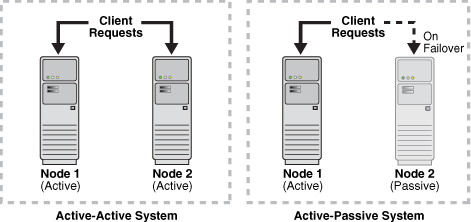
With the failure isolated, traffic must be redirected. Load balancers shift incoming requests to standby or secondary systems that are already running and synchronized. In active-active architectures, traffic simply redistributes across remaining nodes. In active-passive setups, a standby system is promoted to active status.

This transition is where architectural choices matter most. Systems that rely on manual intervention or slow synchronization may experience noticeable downtime. In contrast, environments designed for high availability execute these transitions automatically, often in seconds.

For users, this can mean the difference between a brief hiccup and a prolonged outage.

Data Consistency and State Management

Failover is not just about redirecting traffic. It is also about ensuring data integrity. Databases and storage systems must be kept in sync so that transactions are not lost or duplicated during the switch.

Enterprise hosting environments use replication strategies—synchronous or asynchronous depending on the workload—to ensure that backup systems have an up-to-date view of data. During failover, these replicas become authoritative, allowing operations to continue without data corruption.

This step is particularly critical in financial systems, e-commerce platforms, and SaaS environments where data accuracy is as important as availability.

Recovery Without Panic

Once traffic has been successfully redirected and systems are stable, attention turns to recovery. The failed component is diagnosed, repaired, or replaced. Importantly, this happens without pressure, because the service is already running on alternate infrastructure.

This separation between incident response and service availability is what distinguishes mature hosting environments. Recovery can be handled methodically rather than urgently, reducing the risk of human error and secondary failures.

Providers experienced in high-availability operations, such as Atlantic.Net, design their platforms so that failover is a routine operational event, not a crisis.

Validation and Reintegration

After the issue is resolved, the repaired component is tested and gradually reintroduced into the production environment. Traffic is rebalanced, replication resumes, and monitoring confirms that performance and stability meet expected standards.

This reintegration phase is deliberate. Rushing a component back into service can reintroduce instability. Mature hosting environments treat reintegration with the same caution as initial deployment.

Why Users Often Never Notice

When failover is engineered correctly, users may never realize it occurred. Requests continue to resolve, transactions complete, and applications remain responsive. This apparent invisibility is the hallmark of effective high-availability design.

It also explains why failover capability is difficult to evaluate from the outside. Its success is measured by absence of disruption, not visible action.

Failover as a Measure of Hosting Quality

Failover events are stress tests for hosting providers. They expose weaknesses in monitoring, automation, architecture, and operational discipline. Providers that cut corners may advertise uptime but struggle when real failures occur.

Enterprise-grade hosting treats failover not as an emergency feature, but as a core operational process—tested, refined, and executed regularly. For businesses running critical workloads, this capability is not optional. It is fundamental.

Conclusion

A hosting failover event is not a single action, but a sequence of coordinated responses: detection, isolation, rerouting, data protection, recovery, and reintegration. When these steps are engineered and automated properly, failure becomes manageable rather than catastrophic.

For growing companies and enterprises alike, understanding what happens during failover highlights an important truth: reliability is not about avoiding failure entirely, but about designing systems that continue to function when failure inevitably occurs.

In that sense, failover is not a backup plan. It is the real plan.

How CDNs Reduce Infrastructure Risk, Not Just Speed Up Content

0

For many years, Content Delivery Networks were viewed as a performance optimization tool — a way to make websites load faster by caching content closer to users. Speed was the headline benefit, and latency reduction was the primary selling point.

Today, that perception is incomplete.

Modern CDNs play a far more strategic role. They have evolved into distributed infrastructure layers that actively reduce operational, security, and availability risk. For growing companies, enterprises, and regulated platforms, CDNs are no longer just about faster content delivery; they are about protecting core systems from failure, overload, and attack.

Risk Has Shifted to the Network Edge

As applications have become more distributed and user bases more global, infrastructure risk has shifted outward. Traffic no longer flows predictably from a single region or access point. Instead, platforms must handle unpredictable spikes, malicious activity, regional outages, and varying network conditions across continents.

In traditional architectures, most of this traffic reaches the origin servers before being processed or filtered. This creates a fragile model where core infrastructure absorbs the full impact of user behavior and external threats.

CDNs change this dynamic by absorbing and managing risk at the edge, long before it reaches origin systems.

Reducing Load on Origin Infrastructure

One of the most immediate ways CDNs reduce risk is by minimizing the amount of traffic that reaches origin servers. By caching static and semi-dynamic content at edge locations, CDNs prevent repeated requests from hitting backend systems.

This reduction in origin load has important risk implications. Lower load means fewer chances of resource exhaustion, fewer cascading failures, and greater stability during traffic surges. When marketing campaigns, viral traffic, or seasonal demand spikes occur, the CDN acts as a buffer, smoothing demand rather than amplifying it.

For infrastructure teams, this buffering effect transforms unpredictable user behavior into manageable, distributed load patterns.

Built-In Protection Against Traffic Surges and Abuse

Traffic spikes are not always benign. Distributed denial-of-service attacks, bot activity, and scraping attempts can overwhelm infrastructure if they reach core systems unchecked. CDNs provide a first line of defense by inspecting and filtering traffic at the network perimeter.

Modern CDN platforms integrate traffic analysis, rate limiting, and anomaly detection directly into their edge nodes. Malicious requests can be blocked, challenged, or throttled before they ever touch origin servers. This reduces the likelihood that an attack will escalate into an outage.

Providers such as Cloudflare have built entire platforms around this principle, combining content delivery, traffic filtering, and distributed security into a single edge layer.

Improving Availability Through Geographic Distribution

Infrastructure outages are often regional rather than global. Power issues, network disruptions, or upstream provider failures can affect entire data centers or regions at once. In centralized architectures, these events can take services offline completely.

CDNs mitigate this risk through geographic distribution. Content and routing logic are spread across hundreds or thousands of edge locations worldwide. When one region experiences issues, traffic can be rerouted dynamically to healthy nodes elsewhere.

This capability transforms availability from a single-location dependency into a distributed resilience model. Instead of relying solely on redundancy at the data center level, organizations gain resilience at the network level.

Shielding Origin Systems From Failure Cascades

In tightly coupled systems, failures tend to cascade. A sudden spike in requests can overwhelm application servers, slow down databases, and trigger timeouts that ripple through dependent services. CDNs act as a shock absorber in these scenarios.

By terminating connections at the edge and managing request flow intelligently, CDNs prevent backend systems from being exposed to sudden or excessive load. Even when origin systems are under stress, the CDN can continue serving cached responses, buying time for recovery without complete service interruption.

This separation between user traffic and core systems reduces the blast radius of failures and supports more graceful degradation under stress.

Enhancing Security Without Increasing Complexity

Security controls implemented solely at the origin can increase complexity and operational burden. Firewalls, intrusion detection systems, and traffic filters must scale alongside traffic, often requiring significant tuning and maintenance.

CDNs offload much of this responsibility by enforcing security policies at scale across their distributed networks. Encryption, certificate management, request validation, and threat mitigation are handled consistently at the edge, reducing the operational load on internal teams.

For organizations operating in regulated or high-risk environments, this centralized enforcement at a distributed layer simplifies security architecture while strengthening protection.

Supporting Safer Scaling and Growth

As platforms grow, infrastructure risk often increases faster than capacity. More users, more integrations, and more endpoints introduce more potential failure points. CDNs support safer scaling by ensuring that growth in traffic does not translate directly into growth in backend risk.

Because edge infrastructure scales horizontally and globally, it can absorb growth without requiring immediate changes to origin architecture. This decoupling allows organizations to scale user-facing services confidently while evolving core systems at a controlled pace.

For leadership teams, this means fewer emergency infrastructure projects and more predictable growth trajectories.

CDNs as a Strategic Risk Layer

The most significant shift in how CDNs are used today is conceptual. They are no longer treated as optional performance add-ons, but as strategic risk management layers. They protect revenue by maintaining availability, protect reputation by preventing outages, and protect operations by reducing stress on core systems.

This is why CDNs are now standard components in enterprise, financial, SaaS, and e-commerce architectures. They are not deployed solely to improve page load times, but to ensure that infrastructure remains stable under real-world conditions.

Conclusion

Speed may be the most visible benefit of CDNs, but it is not the most important one. The true value of a Content Delivery Network lies in its ability to reduce infrastructure risk by distributing load, filtering threats, absorbing spikes, and isolating failures.

In an environment where downtime is costly and trust is fragile, CDNs provide a layer of protection that extends far beyond performance optimization. They transform infrastructure from a single point of failure into a resilient, distributed system designed to withstand the unpredictability of modern digital demand.

For organizations serious about reliability and growth, CDNs are no longer just about being fast. They are about being safe.

Why “Good Enough” Hosting Eventually Fails Growing Companies

0

When companies are small, “good enough” hosting feels like a smart decision. It keeps costs low, setups are quick, and early growth rarely pushes infrastructure to its limits. In the beginning, the business focus is product-market fit, customer acquisition, and survival not server architecture.

But growth has a way of changing the rules.

As companies scale, infrastructure quietly moves from being a background utility to becoming a core business dependency. What once worked acceptably well begins to show cracks, and those cracks tend to appear at exactly the moments when reliability, speed, and trust matter most. This is why “good enough” hosting doesn’t usually fail immediately  it fails eventually, and often expensively.

Growth Exposes Hidden Infrastructure Assumptions

Early-stage hosting choices are usually based on assumptions that stop being true over time. Traffic is assumed to be modest, workloads predictable, and user expectations forgiving. As a company grows, these assumptions break down.

More users mean more concurrent activity. More features mean more background processing. More integrations mean more points of dependency. Infrastructure that was never designed for sustained load begins to behave unpredictably. Pages load slower under pressure, background jobs queue up, and small incidents start cascading into larger operational problems.

At this stage, the issue is not that the hosting provider is “bad.” It is that the infrastructure model was never meant to support a growing business with rising complexity and expectations.

Performance Problems Become Revenue Problems

In growing companies, performance is no longer a technical metric — it becomes a revenue variable. Slower response times affect conversion rates, user engagement, and customer satisfaction. For SaaS platforms, this can mean churn. For e-commerce businesses, abandoned carts. For B2B services, longer sales cycles and reduced trust.

“Good enough” hosting often relies on shared resources, aggressive consolidation, or limited performance guarantees. These models work when demand is low and tolerant. Under growth, they introduce inconsistency, and inconsistency erodes confidence.

The danger is that performance degradation often happens gradually. Teams normalize slower systems, work around issues, and defer upgrades — until a major customer is lost or a critical deadline is missed.

Reliability Stops Being Optional

Downtime is another area where “good enough” hosting quietly becomes inadequate. Early in a company’s life, occasional outages may be tolerated. As the business grows, downtime carries heavier consequences: missed transactions, broken integrations, contractual penalties, and reputational damage.

Growing companies often discover that their hosting environment lacks true redundancy. Single points of failure emerge in compute, storage, or networking. Maintenance windows cause service interruptions. Recovery processes are manual and slow.

At scale, reliability is not about reacting quickly to problems; it is about preventing them through design. Infrastructure that was never engineered for high availability struggles to meet this expectation, regardless of how responsive support may be.

Security and Compliance Catch Up with Success

Success attracts attention — from customers, partners, auditors, and attackers alike. As companies grow, they handle more data, integrate with regulated partners, and face increasing scrutiny around security practices.

“Good enough” hosting typically prioritizes convenience over isolation and control. Security responsibilities are blurred, audit visibility is limited, and customization options are restricted. What once felt manageable becomes a liability when compliance requirements appear or enterprise customers start asking hard questions.

At this point, infrastructure is no longer just supporting the business; it is shaping which opportunities the business can pursue. Deals are delayed, partnerships are blocked, and growth slows not because of market demand, but because of infrastructure constraints.

Operational Complexity Outgrows the Platform

As systems mature, they require customization, tuning, and integration that generic hosting platforms struggle to support. Growing engineering teams need control over configurations, performance optimization, and deployment strategies. Product teams need infrastructure that can evolve alongside features.

“Good enough” hosting environments often impose limits that force teams into workarounds. These workarounds increase technical debt, slow development, and create fragile systems that are difficult to maintain. Over time, the cost of managing these limitations outweighs the simplicity that initially attracted the company to the platform.

The Migration Becomes More Painful the Longer It’s Delayed

One of the most costly aspects of “good enough” hosting is that it encourages postponement. Companies delay upgrading infrastructure because the system still functions — barely. By the time the move becomes unavoidable, the environment is more complex, data volumes are larger, and dependencies are deeper.

What could have been a controlled, strategic migration turns into a high-risk, time-sensitive project. This is often when leadership realizes that infrastructure decisions made early in the company’s life have long-term consequences.

Why Mature Companies Choose Enterprise-Grade Hosting

Growing companies that outgrow “good enough” hosting tend to converge on similar solutions: dedicated infrastructure, higher availability architectures, and providers with experience supporting scaling and regulated environments. These choices are not about prestige; they are about reducing uncertainty.

Providers such as Atlantic.Net are often selected at this stage because their platforms are designed for predictable performance, strong isolation, and operational maturity. For growing businesses, this shift represents a transition from infrastructure as a cost-saving tool to infrastructure as a risk management strategy.

Conclusion

“Good enough” hosting rarely fails outright. Instead, it fails quietly, gradually, and at the worst possible time — when a company is growing, under pressure, and increasingly visible. What once supported experimentation becomes a constraint on execution.

Growing companies succeed by anticipating change, not reacting to crises. Infrastructure that is chosen with growth in mind enables teams to move faster, sell with confidence, and build trust with customers and partners.

In the long run, hosting that is merely “good enough” is rarely good enough for a business that intends to scale.

Why Core Banking Systems Still Prefer Dedicated Infrastructure

0

Despite rapid innovation in fintech, cloud platforms, and digital banking interfaces, the core of most banking institutions remains anchored to dedicated infrastructure. While customer-facing applications may adopt flexible, cloud-native models, the systems that actually record balances, process transactions, and maintain financial truth operate under a very different set of constraints.

Core banking systems are not just software platforms. They are systemically important financial engines, and the infrastructure that supports them must prioritize certainty over convenience. This is why, even in 2026, banks continue to rely on dedicated environments for their most critical workloads.

Core Banking Systems Carry Systemic Responsibility

At the heart of every bank lies its core banking system. This is the system responsible for maintaining account balances, processing deposits and withdrawals, reconciling transactions, and enforcing financial integrity. Errors or downtime at this level do not merely inconvenience users; they can disrupt payment networks, affect liquidity, and trigger regulatory scrutiny.

Unlike many modern applications, core banking platforms are expected to function continuously, with near-zero tolerance for failure. They operate across business hours, after-hours batch processing, settlement windows, and cross-border clearing cycles. Infrastructure instability during any of these periods can have cascading effects far beyond a single institution.

Dedicated infrastructure provides the controlled environment required to support this responsibility. It offers predictable behavior, clear failure domains, and deterministic recovery paths—qualities that are essential when systems underpinning national or regional financial activity are involved.

Predictability Matters More Than Elasticity

Cloud platforms excel at elasticity, allowing resources to scale dynamically based on demand. While this is valuable for many applications, core banking systems prioritize predictability over rapid scaling. Transaction volumes in core systems are often steady and well understood, governed by regulatory schedules and customer behavior patterns.

Dedicated infrastructure aligns naturally with this predictability. Resources are reserved, performance characteristics are stable, and capacity planning is deliberate rather than reactive. This stability reduces the risk of unexpected throttling or contention, which can occur in shared environments during periods of platform-wide demand.

For banks, knowing exactly how systems will behave under load is more valuable than the ability to scale instantly. Predictability simplifies operational oversight and strengthens confidence in the institution’s ability to meet its obligations.

Regulatory Expectations Shape Infrastructure Choices

Banking is one of the most heavily regulated industries in the world. Regulators do not merely assess outcomes; they examine how systems are designed, operated, and controlled. Infrastructure decisions are therefore inseparable from compliance considerations.

Dedicated environments provide clearer lines of responsibility and control. Physical and logical isolation simplifies audits, access management, and incident investigation. Regulators often expect banks to demonstrate not only that systems are secure, but that they are operated in environments where risk is tightly managed and well understood.

In many jurisdictions, requirements around data residency, auditability, and operational resilience make shared or opaque infrastructure models difficult to justify for core banking workloads. Dedicated infrastructure offers transparency that aligns with regulatory expectations and reduces compliance friction.

Availability Is a Financial Obligation

Core banking systems must meet stringent availability targets, often exceeding 99.99%. Achieving this level of uptime requires more than redundant components; it requires infrastructure designed to withstand failure without service interruption.

Dedicated environments allow banks to implement multi-layered redundancy across compute, storage, networking, and power. Failover mechanisms are tailored to the specific workload, and recovery procedures are tested regularly under controlled conditions. This approach contrasts with generalized platforms where recovery processes may be abstracted or shared across tenants.

For banks, uptime is not a marketing metric. It is a contractual and regulatory obligation. Dedicated infrastructure provides the engineering foundation necessary to meet this obligation consistently.

Security and Isolation Protect Financial Integrity

Security in core banking systems is inseparable from infrastructure isolation. These systems handle sensitive financial data and control mechanisms that, if compromised, could have severe consequences. While modern cloud platforms offer strong security capabilities, the shared responsibility model introduces complexity that banks must manage carefully.

Dedicated infrastructure reduces this complexity by limiting the attack surface and clarifying accountability. Physical isolation minimizes cross-tenant risk, while full control over system configuration allows banks to enforce strict security policies tailored to their threat model.

This isolation also supports internal governance. Banks can implement security controls, monitoring systems, and access restrictions without depending on external platform constraints, strengthening overall risk management.

Legacy Integration and Operational Continuity

Many core banking platforms have evolved over decades. They integrate with payment networks, regulatory reporting systems, and internal applications that expect stable, long-lived environments. Migrating these systems to highly abstracted platforms can introduce compatibility challenges and operational risk.

Dedicated infrastructure supports continuity. It allows banks to modernize incrementally, integrating new components without destabilizing existing systems. This measured approach aligns with the conservative risk posture required in financial institutions, where stability often outweighs speed of change.

Cost Predictability and Long-Term Planning

While cloud pricing models offer flexibility, they can introduce variability that complicates financial planning at scale. Core banking workloads run continuously and predictably, making them well suited to fixed-cost infrastructure models.

Dedicated servers provide cost transparency. Banks know exactly what infrastructure will cost over time, enabling accurate budgeting and long-term planning. This predictability supports governance processes and aligns with the financial discipline expected in regulated institutions.

The Role of Enterprise Infrastructure Providers

Supporting core banking workloads requires more than hardware. It demands data centers with resilient power and cooling, secure network architecture, and operational teams experienced in regulated environments. Providers such as Atlantic.Net specialize in delivering dedicated hosting environments designed to meet these stringent requirements.

These providers act as infrastructure partners rather than commodity vendors, supporting banks with platforms engineered for compliance, availability, and long-term stability.

Conclusion

Core banking systems represent the foundation of financial institutions, carrying responsibilities that extend beyond individual organizations to the broader economy. Their infrastructure must therefore prioritize reliability, control, and transparency above all else.

Dedicated infrastructure continues to meet these needs in ways that more abstracted models struggle to replicate. By offering predictable performance, strong isolation, and regulatory alignment, dedicated environments provide the stability that core banking systems require.

In a rapidly evolving financial landscape, innovation may occur at the edges, but the core remains anchored to infrastructure designed for trust.

Why AI and Machine Learning Workloads Prefer Bare Metal Servers

0

Artificial intelligence and machine learning have moved from experimental technologies into production systems that power real products, decisions, and services. Recommendation engines, fraud detection systems, computer vision platforms, natural language models, and predictive analytics now operate at scales that demand extraordinary computing power.

As these workloads mature, a clear pattern has emerged: serious AI and machine learning systems gravitate toward bare metal servers. This preference is not driven by tradition or conservatism, but by the technical realities of how AI workloads behave under load and at scale.

AI Workloads Are Fundamentally Different

Unlike conventional web applications, AI and machine learning workloads are computationally intense, data-hungry, and often long-running. Training a model may involve processing terabytes of data over days or weeks, while inference systems must deliver results in milliseconds with absolute consistency.

These workloads stress every layer of infrastructure simultaneously. CPUs, GPUs, memory bandwidth, storage throughput, and network performance all become limiting factors. Even small inefficiencies introduced by abstraction layers can compound into significant performance penalties.

Virtualized environments are optimized for flexibility and multi-tenancy. AI workloads, by contrast, prioritize raw, uninterrupted access to hardware. This mismatch is one of the primary reasons bare metal servers remain the preferred foundation for serious machine learning systems.

Performance Without the Virtualization Penalty

Virtualization introduces overhead. While this overhead is acceptable for many applications, it becomes problematic for AI workloads that depend on maximum hardware utilization. GPU-bound tasks, in particular, are highly sensitive to latency, memory access patterns, and driver-level optimizations.

Bare metal servers eliminate the hypervisor layer, allowing AI frameworks to interact directly with the underlying hardware. This direct access translates into higher throughput, lower latency, and more predictable performance during both training and inference.

For organizations running large-scale training jobs or latency-sensitive inference systems, the difference is measurable. Faster training cycles mean quicker iteration and deployment. More efficient inference means better user experience and lower operational cost per request.

Full Control Over GPU and Accelerator Configuration

Modern AI workloads rely heavily on specialized hardware such as GPUs, TPUs, and other accelerators. The effectiveness of these components depends not only on their raw capabilities, but on how they are configured, cooled, and interconnected.

Bare metal environments provide full control over hardware selection and layout. Organizations can choose specific GPU models, optimize PCIe configurations, and tune system-level parameters to match their workload characteristics. This level of customization is difficult, and sometimes impossible, to achieve in shared or abstracted environments.

For machine learning teams pushing models to their limits, this control enables optimizations that directly impact training speed, inference latency, and overall system efficiency.

Predictable Performance for Long-Running Jobs

AI training jobs are often long-running and resource-intensive. Interruptions, throttling, or performance variability can waste hours or days of computation. In shared environments, resource contention or platform-level scheduling decisions can introduce unpredictability that disrupts these workflows.

Bare metal servers provide performance isolation. Resources are dedicated exclusively to a single workload, ensuring consistent behavior throughout the training lifecycle. This predictability is especially valuable for research teams, production pipelines, and time-sensitive deployments where delays carry significant cost.

From an operational perspective, predictable performance simplifies planning and reduces the risk of failed or incomplete training runs.

Data Gravity and High-Throughput Storage

AI systems do not only require compute power; they require fast, sustained access to large datasets. Moving data repeatedly between remote storage and compute nodes introduces latency and bandwidth constraints that slow down training and inference.

Bare metal servers support high-performance local storage architectures, such as NVMe-based arrays, that deliver the throughput required for data-intensive workloads. By colocating compute and data, organizations reduce data transfer overhead and improve overall pipeline efficiency.

This concept of data gravity becomes increasingly important as datasets grow. Once data reaches a certain scale, it becomes more efficient to bring computation to the data rather than moving data across networks.

Network Performance for Distributed Training

Many modern AI models are trained across multiple nodes using distributed frameworks. In these scenarios, network latency and bandwidth play a critical role in overall performance. Synchronization delays between nodes can significantly slow training if the network becomes a bottleneck.

Bare metal environments allow organizations to deploy high-speed, low-latency networking configurations optimized for distributed workloads. This capability ensures that scaling out across multiple servers delivers real performance gains rather than diminishing returns.

Such configurations are particularly valuable for deep learning workloads that rely on frequent parameter updates and inter-node communication.

Security, IP Protection, and Isolation

AI models and datasets often represent significant intellectual property. For organizations operating in competitive or regulated environments, protecting this IP is a strategic priority.

Bare metal servers provide physical isolation, reducing exposure to risks associated with multi-tenant platforms. This isolation simplifies security architecture and helps organizations meet internal governance requirements and external compliance standards.

For enterprises and research institutions alike, this level of control supports both security assurance and audit readiness.

Cost Efficiency at Sustained Scale

While cloud-based GPU instances offer flexibility, their cost structure can become prohibitive for sustained AI workloads. Long-running training jobs and constant inference traffic can result in high, variable expenses that are difficult to predict.

Bare metal servers offer a different economic model. Fixed-cost infrastructure combined with high utilization often results in lower cost per training run or inference request over time. This predictability supports better financial planning and makes large-scale AI initiatives more sustainable.

As AI systems move from experimentation into core business operations, this cost efficiency becomes increasingly important.

Why Infrastructure Providers Matter

Not all bare metal environments are equal. AI workloads demand more than just access to hardware; they require stable power, advanced cooling, high-speed networking, and operational expertise. Providers experienced in high-performance and regulated workloads, such as Atlantic.Net, design their infrastructure to support these demanding use cases reliably.

Such providers bridge the gap between raw hardware and production-ready platforms, enabling organizations to focus on model development rather than infrastructure limitations.

Conclusion

AI and machine learning workloads expose the limits of generalized infrastructure. Their appetite for compute, data throughput, and predictable performance makes bare metal servers not a legacy choice, but a strategic one.

By offering direct hardware access, performance isolation, and architectural control, bare metal environments align closely with the realities of modern AI systems. As artificial intelligence becomes more deeply embedded in critical applications, the infrastructure supporting it must deliver not only flexibility, but certainty.

For organizations serious about AI at scale, bare metal servers provide the foundation required to train faster, infer smarter, and operate with confidence in an increasingly data-driven world.

Why Large Online Stores Abandon Shared Hosting

0

Most large online stores did not begin with sophisticated infrastructure. They started lean, often on shared hosting, validating products, testing demand, and learning their market. At that stage, shared hosting made sense: it was affordable, easy to manage, and sufficient for low to moderate traffic.

But e-commerce success has a way of exposing infrastructure limits very quickly. As traffic grows, catalogs expand, and transactions become constant, shared hosting stops being a cost-saving choice and starts becoming a business risk. This is why nearly every serious, high-revenue online store eventually abandons shared hosting—not because it failed outright, but because it can no longer keep up with the realities of scale.

Shared Hosting Works Until Performance Starts Affecting Revenue

Shared hosting environments are designed for efficiency, not intensity. Multiple websites share the same server resources, including CPU, memory, storage, and network bandwidth. When traffic is light and workloads are predictable, this model performs adequately.

Large online stores operate under very different conditions. Product searches, dynamic pricing, inventory checks, personalized recommendations, and real-time checkout processes place continuous demand on server resources. In shared environments, these demands compete with unrelated websites hosted on the same machine. The result is performance variability—pages load slower at peak times, background processes lag, and checkout flows become inconsistent.

In e-commerce, performance degradation translates directly into lost revenue. Customers do not wait for slow product pages or delayed payment confirmations. They leave. At scale, even small performance dips compound into significant financial loss, turning shared hosting from a budget-friendly option into a silent drain on sales.

Traffic Spikes Reveal the Weakest Links

One of the defining characteristics of e-commerce growth is uneven traffic. Marketing campaigns, seasonal sales, influencer promotions, and flash deals can generate sudden surges in visitors. While shared hosting can handle steady, moderate loads, it struggles under sharp spikes.

When traffic increases rapidly, shared environments often respond by throttling resources to maintain overall server stability. This protects the hosting provider but harms the individual store. Pages slow down, carts time out, and payment gateways fail to respond quickly enough. The very moments designed to drive growth instead expose infrastructure fragility.

Large online stores learn quickly that peak traffic, not average traffic, defines infrastructure requirements. Shared hosting is optimized for averages, not extremes, making it unsuitable for brands that rely on promotional momentum and high-volume campaigns.

Checkout Reliability Becomes Non-Negotiable

As order volumes increase, the checkout process becomes the most critical and sensitive component of the platform. Payment authorization, fraud checks, inventory updates, and order confirmations must execute reliably and in sequence. Any delay or failure introduces errors that affect both customers and internal operations.

Shared hosting environments offer limited control over how resources are allocated during these moments. Background activity from other tenants can interfere with time-sensitive processes, increasing the likelihood of failed transactions or duplicated orders. For large stores, these issues generate support tickets, refunds, and reputational damage that far outweigh the cost savings of shared infrastructure.

Dedicated environments allow checkout workflows to be isolated, prioritized, and optimized, ensuring that payment-related processes are never disrupted by unrelated workloads.

Security and Compliance Pressures Increase with Scale

Growth brings scrutiny. Large online stores handle more customer data, process higher payment volumes, and attract greater attention from malicious actors. Security expectations rise accordingly, both from customers and from payment providers.

Shared hosting introduces inherent limitations in isolation. While reputable providers implement safeguards, the presence of multiple tenants on the same system expands the attack surface. For stores subject to compliance requirements such as PCI-DSS, shared environments can complicate audits and increase remediation costs.

As brands mature, they seek infrastructure models that simplify security architecture and compliance management. Dedicated hosting offers clearer boundaries, stronger isolation, and greater visibility into system behavior—qualities that become increasingly valuable as transaction volumes and regulatory obligations grow.

Customization and Optimization Become Strategic Needs

Early-stage stores rely on standard configurations and off-the-shelf platforms. Large online stores, by contrast, require customization. Advanced search capabilities, real-time inventory syncing, personalized user experiences, and complex integrations demand infrastructure that can be tuned precisely.

Shared hosting limits this flexibility. Restrictions on server configuration, software versions, and performance tuning create friction for development teams. Innovation slows as teams work around platform constraints rather than building features.

Dedicated servers remove these limitations, allowing stores to optimize databases, caching layers, and application stacks according to their specific workload. This control supports faster iteration, better performance, and more sophisticated customer experiences.

Predictability Replaces Convenience

At scale, unpredictability is the enemy. Shared hosting introduces variables that are difficult to control, from neighboring traffic patterns to provider-level resource management policies. For large stores, this unpredictability complicates planning and increases operational stress.

Dedicated infrastructure offers predictability. Resources are reserved, performance is consistent, and capacity planning becomes straightforward. Finance teams can forecast infrastructure costs accurately, while operations teams gain confidence that systems will behave reliably during critical periods.

This shift from convenience to predictability reflects a broader maturation process. Infrastructure evolves from a supporting tool into a strategic asset.

Why Large Brands Rarely Go Back

Once online stores migrate away from shared hosting, they rarely return. The benefits of dedicated environments—stability, control, security, and scalability—become embedded in daily operations. Infrastructure stops being a bottleneck and starts enabling growth rather than limiting it.

This is why many established e-commerce brands partner with providers such as Atlantic.Net, whose infrastructure is designed to support high-traffic, transaction-heavy platforms without the compromises inherent in shared environments.

Conclusion

Shared hosting plays an important role in the early stages of e-commerce, but it is not designed for sustained growth, high transaction volumes, or operational maturity. As online stores scale, the demands placed on infrastructure change fundamentally. Performance becomes revenue-critical, reliability becomes trust-critical, and security becomes non-negotiable.

Large online stores abandon shared hosting not because it fails completely, but because success exposes its limits. Dedicated infrastructure represents a deliberate move toward stability, control, and long-term resilience—qualities that serious e-commerce brands require to compete and grow in an increasingly demanding digital marketplace.

Why Financial Platforms Demand 99.99% Uptime How Availability Became a Non-Negotiable Requirement for Modern Finance

0

In financial services, uptime is not a vanity metric. It is a contract with the market.

When a banking app fails to load, payments stop. When a trading platform stalls, losses accumulate. When a core system goes offline, trust erodes instantly. For financial platformsbanks, payment processors, fintechs, and trading systems—availability is inseparable from credibility. This is why 99.99% uptime is not aspirational; it is expected.

That number represents more than engineering ambition. It reflects the realities of a global, always-on financial system where users transact across time zones and regulators demand uninterrupted access to funds and records.

The Cost of Downtime in Financial Systems

Downtime in finance is uniquely expensive because it compounds across multiple dimensions at once. There is the immediate operational impact: transactions fail, balances do not update, and customer support channels are flooded. There is also the financial cost, which can include lost transaction fees, penalties from partners, and compensation to affected users.

Beyond these direct effects lies reputational damage. Financial platforms operate on trust, and trust is fragile. Users may tolerate occasional delays in entertainment or content services, but they expect absolute reliability when money is involved. Even brief outages can prompt customers to move funds elsewhere, especially in competitive markets where alternatives are a click away.

For regulated institutions, downtime also introduces compliance risk. Regulators increasingly view prolonged unavailability as a failure of operational resilience, not merely a technical incident.

Availability as a Regulatory and Contractual Obligation

Financial platforms are governed by more than customer expectations. Service availability is often embedded in regulatory frameworks, partner agreements, and service-level commitments. Payment networks, correspondent banks, and enterprise clients require assurances that systems will be accessible and responsive at all times.

A 99.99% uptime target translates to less than an hour of unplanned downtime per year. Achieving this level of availability requires deliberate architectural choices, continuous monitoring, and disciplined operational processes. It is not something that can be retrofitted onto infrastructure designed for lower-stakes applications.

From a governance perspective, uptime becomes a measure of institutional maturity. It signals that an organization understands its role within the broader financial ecosystem and has invested accordingly.

High Availability Is an Architectural Discipline

Reaching four nines of uptime is not about a single technology or vendor. It is the outcome of layered design. Financial platforms achieve this by eliminating single points of failure across compute, storage, networking, and power.

Systems are deployed across multiple data centers or availability zones, with traffic intelligently routed to healthy components. Failover is automated and tested regularly, ensuring that recovery does not depend on manual intervention during an incident. Storage systems replicate data continuously, preserving integrity even when individual components fail.

This approach treats failure as inevitable and plans for it proactively. In financial environments, resilience is built into the system’s DNA rather than handled as an exception.

Infrastructure Reliability as a Trust Signal

For banks and fintechs, infrastructure choices send a signal to partners and regulators. Hosting environments that are designed for resilience demonstrate seriousness about operational risk. This is why many financial platforms partner with providers experienced in regulated, high-availability workloads, such as Atlantic.Net, whose infrastructure models are built around redundancy, compliance, and continuous uptime.

Such providers do more than supply servers. They offer environments where availability targets are supported by physical data center design, network diversity, and around-the-clock operational oversight.

The Relationship Between Uptime and Security

Availability and security are often discussed separately, but in financial systems they are deeply connected. Denial-of-service attacks, infrastructure failures, and misconfigurations can all result in outages. As a result, high uptime demands strong security controls at the network and application layers.

Financial platforms invest heavily in monitoring and threat mitigation to ensure that malicious activity does not disrupt service. Traffic filtering, rate limiting, and real-time anomaly detection are deployed not only to protect data, but to preserve availability itself.

In this context, uptime is a security outcome as much as an operational one.

Customer Experience in an Always-On Economy

Modern financial users expect continuous access. Payroll runs overnight, international transfers occur across borders, and digital wallets are used at any hour. There is no longer a concept of “business hours” in finance.

This reality places pressure on infrastructure to perform consistently under varying load conditions. Peaks are not limited to predictable windows; they can occur during market volatility, regional events, or viral growth moments. Systems must absorb these fluctuations without degradation.

High uptime ensures that customer experience remains stable regardless of external conditions, reinforcing confidence in the platform.

Operational Resilience as a Competitive Advantage

As financial markets become more crowded, reliability differentiates serious platforms from the rest. Organizations that consistently meet high availability standards are more likely to win enterprise clients, secure banking partnerships, and expand into regulated markets.

From an executive standpoint, investing in uptime reduces long-term risk. It shortens incident response cycles, simplifies regulatory conversations, and protects brand equity. While achieving 99.99% uptime requires sustained investment, the cost of failing to do so is often far higher.

Conclusion

For financial platforms, 99.99% uptime is not about technical prestige. It is about responsibility. Money is a foundational element of modern life, and the systems that move it must operate with exceptional reliability.

By demanding near-continuous availability, banks and fintechs acknowledge the trust placed in them by users, partners, and regulators. Infrastructure that meets this standard does more than keep systems online. It upholds confidence in the financial system itself, ensuring that digital finance remains dependable in an increasingly interconnected world.