


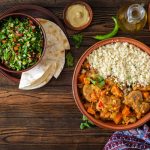


African gastronomy is a rich and diverse tapestry of flavors, ingredients, and culinary traditions that reflect the continent’s cultural heritage and regional diversity. From spicy stews to savory grilled meats, African cuisine offers an array of vibrant dishes that tell stories of community and history. Here’s a culinary journey through some of Africa’s most notable gastronomic delights.
1. North African Cuisine
Couscous
- Overview: A staple made from steamed semolina, often served with vegetables and meats.
- Signature Dish: Couscous with lamb and vegetables is a classic Moroccan dish, often flavored with spices like cumin and coriander.
Tagine
- Overview: A slow-cooked stew named after the earthenware pot it’s cooked in.
- Key Ingredients: Commonly includes chicken, preserved lemons, olives, and a variety of spices.
2. West African Flavors
Jollof Rice
- Overview: A beloved one-pot dish made with rice, tomatoes, and spices, often accompanied by proteins.
- Regional Variations: Each country, from Nigeria to Ghana, boasts its own twist on this iconic dish.
Egusi Soup
- Overview: A thick soup made from ground melon seeds, often cooked with leafy greens and served with fufu.
- Cultural Significance: A staple in many Nigerian homes, reflecting communal dining traditions.
3. East African Delicacies
Injera
- Overview: A sourdough flatbread made from teff flour, serving as both a plate and a utensil.
- Accompaniments: Often served with a variety of stews (wats) such as doro wat (spicy chicken stew).
Ugali
- Overview: A staple made from maize flour, cooked to a dough-like consistency.
- Pairings: Typically served with meats, vegetables, or fish, especially in Kenya and Tanzania.
4. Southern African Specialties
Bunny Chow
- Overview: A street food originating from Durban, consisting of a hollowed-out loaf of bread filled with curry.
- Cultural Influences: Reflects the Indian influence in South African cuisine.
Braai
- Overview: A traditional barbecue that is more than just cooking meat; it’s a social event.
- Common Foods: Includes boerewors (sausage), steak, and grilled vegetables, often enjoyed with pap (maize porridge).
5. Central African Cuisine
Saka Saka
- Overview: Made from cassava leaves, cooked with peanuts and spices, popular in the Democratic Republic of Congo.
- Serving Style: Often served with rice or plantains.
Plantains
- Overview: A versatile ingredient used in various forms, from fried to boiled.
- Culinary Uses: Commonly served as a side dish or component in many Central African meals.
6. Spices and Ingredients
- Overview: African cuisine is characterized by the use of diverse spices and local ingredients.
- Common Spices: Includes harissa in North Africa, peri-peri in Southern Africa, and various indigenous herbs and spices across the continent.
7. Street Food Culture
- Overview: Street food is an integral part of African gastronomy, offering a taste of local flavors.
- Popular Items: Includes samosas, kebabs, and fried doughnuts, widely enjoyed in urban areas.
8. Culinary Traditions and Practices
- Overview: Many African cultures have unique culinary practices, such as communal eating and food-sharing traditions.
- Cultural Significance: Food often plays a central role in celebrations, rituals, and family gatherings.
9. Modern Influences and Innovations
- Overview: Contemporary chefs and food entrepreneurs are reinterpreting traditional dishes with innovative techniques and global influences.
- Impact: This fusion creates new culinary experiences while preserving cultural heritage.
10. Sustainable Practices
- Overview: Increasing awareness of sustainable agriculture and local sourcing is shaping the future of African gastronomy.
- Key Actions: Promoting farm-to-table practices and supporting local farmers enhances food security and community resilience.
Conclusion
African gastronomy is a vibrant reflection of the continent’s rich cultural diversity and history. From traditional dishes to modern innovations, the culinary landscape offers a unique journey through flavors, ingredients, and cooking techniques. Exploring African cuisine not only delights the palate but also fosters a deeper appreciation for the cultures and communities that create these culinary treasures.


