



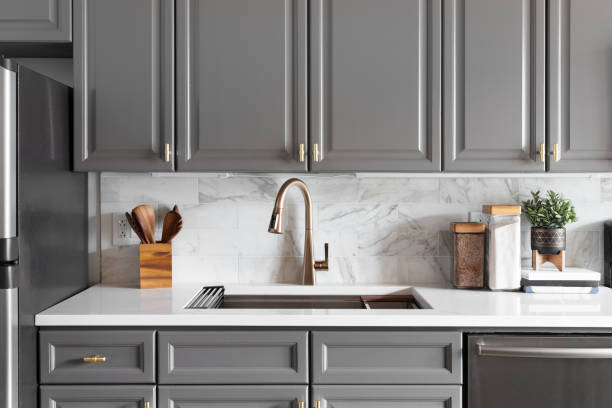

In Zimbabwe, cabinetry is one of those things you only notice when it fails. When it’s done properly, it fades into the background of everyday life—doors open smoothly, shelves carry weight without sagging, finishes stay clean, edges don’t lift, and the kitchen still looks “new” long after the excitement of installation is gone. But when the wrong materials are used, the cabinet announces itself daily: the drawer that jams, the door that drops, the shelf that bows, the swelling around the sink, the peeling corners that start small but spread like a crack in a windscreen.
What makes this frustrating is that most failures don’t start with the carpenter. They start long before the first screw is driven at the point where the board is chosen, the edge finishing is decided, and the fittings are treated like an afterthought. In a market where cost pressure is real and deadlines are tight, it’s easy to be pulled toward whatever is cheapest or fastest. Yet the real cost of “cheap” cabinetry is paid later in repairs rework, reputation damage, and that quiet regret clients feel when the space they invested in starts degrading too soon.
If you’re building a kitchen, installing built-in cupboards (BICs), fitting out an office, or doing shopfront work—especially in Harare—this is the core truth: your final product will never outperform your materials. The smartest cabinet makers, interior designers, and contractors understand that the foundation of quality is not style; it’s supply.
The Zimbabwe reality: heat, moisture, and daily pressure
Cabinetry in Zimbabwe operates under conditions that expose weak materials quickly. Heat and temperature fluctuations stress adhesives and finishes. Moisture around sinks and wet areas tests the integrity of edges. Dust, daily use, heavy loading, and the simple reality of busy households and commercial traffic puts pressure on hinges, runners, and shelves. Add transport and handling often overlooked and you have a perfect environment for premature failure if materials are below standard.
This is why two kitchens can look identical during installation but age very differently. One remains solid and clean years later. The other starts showing wear in months. The difference is rarely “luck.” It’s almost always the quality and suitability of boards, the precision of cutting, the discipline of edging, and the strength of fittings.
Boards are not just boards: they are performance decisions
To many buyers, boards are simply surfaces something you wrap into a cabinet shape. But to professionals, boards are performance decisions. A board determines how well screws hold, how cleanly panels cut, how reliably edges can be sealed, and how stable the structure remains over time. It determines whether the final cabinet feels solid or flimsy, premium or temporary.
This is why specialist suppliers matter. When boards are inconsistent, the whole workflow suffers. You waste material from chipping and incorrect cutting. You fight with finishing. You lose time during installation. And you absorb the blame when the project fails—even if the failure came from materials that never should have been used for that environment in the first place.
Why MelaWood remains a professional favourite
MelaWood has become a trusted choice in modern cabinetry for a reason: it balances reliability, appearance, and practicality. In kitchens and BICs, a material needs to be stable enough for daily use while still offering an attractive finish that suits different interior styles. MelaWood supports that balance well, especially when paired with proper edging and quality fittings.
In essay terms, MelaWood is the “workhorse” material—the board that does the job without drama. It behaves predictably under cutting, it finishes cleanly when handled correctly, and it gives cabinet makers the consistency they need to produce repeatable, professional results. For homeowners and designers, it offers a wide design range that helps bring concepts to life without sacrificing durability.
SupaGloss and the psychology of “premium”
SupaGloss plays a different role. While MelaWood is the dependable standard, SupaGloss is often chosen for its ability to create a premium, modern impression quickly. Gloss finishes are powerful because they change how a space feels cleaner, brighter, more contemporary. In a kitchen especially, the finish becomes part of the identity of the home.
But premium finishes demand premium discipline. Gloss surfaces amplify imperfections: poor alignment, inconsistent edging, careless handling. That’s why the decision to use SupaGloss isn’t just a design decision it’s a workflow decision. When executed with precision, it becomes a standout feature. When executed casually, it becomes the first thing people criticise.
The silent killer of cabinetry: poor edging
If there is one place where cabinets quietly start dying, it is at the edges. Edges are where moisture enters. Edges are where impacts happen. Edges are where cheap finishing gives up first. When edging is poor, the board core is exposed to conditions it was never meant to handle, and deterioration accelerates.
What makes edging so important is that it is not merely cosmetic. It is protective. It seals the board, preserves the finish, and keeps the cabinet stable under real-life use. A cabinet with excellent boards but rushed edging is like a strong house with a leaking roof—failure is only a matter of time.
This is why professional cutting and edging is not a luxury add-on. It is quality assurance.
Cut-and-edge services: how professionals buy back time and consistency
Every cabinet maker knows the pain of inaccurate cuts. One wrong measurement becomes a chain reaction: wasted boards, delays, awkward adjustments on-site, misaligned doors, poor reveals, and an end product that “almost fits” but never feels perfect. It also turns installation into a negotiation between what the design promised and what the cut boards allow.
Professional cut-and-edge services solve this problem at the root. They reduce waste. They improve alignment. They speed up installation. And they produce results that are consistent project after project so that quality stops depending on mood, fatigue, or improvised cutting conditions. For designers and contractors working with deadlines, this consistency isn’t just helpful; it’s essential.
Fittings and accessories: what clients judge every day
Boards create structure, but fittings create experience. The cabinet is judged every time someone opens a door, slides a drawer, or loads a shelf. This is why fittings and accessories are not secondary items—they are what clients interact with daily, and they form the “feel” of quality.
When hinges weaken, doors sag. When runners fail, drawers stick or collapse. When accessories are poor, storage becomes frustrating. Most people won’t know what board was used, but they will remember that their drawers became a problem. For cabinet makers and designers, this matters because the complaint doesn’t go to the supplier—it comes back to you.
Choosing strong cabinet manufacturing fittings and proper BIC closet accessories is one of the simplest ways to protect your workmanship and your reputation.
Worktops are where kitchens either win or disappoint
In kitchens, the worktop carries the most punishment. Water, heat, sharp objects, cleaning chemicals, heavy appliances everything happens there. So choosing between postform/Formica worktops and quartz is not just about looks. It’s about matching the surface to the client’s lifestyle and expectations.
Postform and Formica options can be practical and cost-effective, especially when quality is prioritised and installation is done properly. Quartz, on the other hand, often represents a longer-term premium investment durable, striking, and built for heavy use. The best choice depends on budget and usage, but the principle remains the same: the worktop must be chosen with real-world pressure in mind, not just Pinterest inspiration.
Why specialist supply is the difference between a “job” and a reputation
In Harare and across Zimbabwe, many businesses don’t win because they shout the loudest. They win because they deliver consistently. And consistent delivery almost always begins with supply: the quality of boards, the reliability of stock, and access to services that reduce rework.
That’s where Buildware stands out. Buildware (registered as Ramaboards Pvt Ltd) focuses on supplying boards and fittings accessories for cabinet manufacturing and interior fitting, offering solutions for kitchens, BICs, shopfronts, and office furniture—supported by professional cut-and-edge services. For anyone serious about producing clean finishes and durable results, this specialist approach removes uncertainty from the process.
And for overseas partners—especially designers and contractors linked to the United Kingdom reliable local supply is often the missing piece. When materials and services can be trusted on the ground, projects can be executed to standard without costly compromises.
The bottom line: start where quality actually begins
Cabinetry is not only a design exercise. It is a material decision, a finishing discipline, and a supply relationship. In Zimbabwe, where conditions expose weakness quickly, the projects that last are the ones that begin with the right boards, the right edging, and the right fittings supported by precision services that keep production clean and consistent.
If you want cabinets that still look good after the excitement fades, don’t start with handles and colours. Start with what the cabinet will be made of and who you trust to supply it.
For boards, fittings accessories, and professional cut-and-edge services for kitchens, BICs, shopfronts, and office furniture, Buildware is built for the work that must last.