Home Blog Page 117

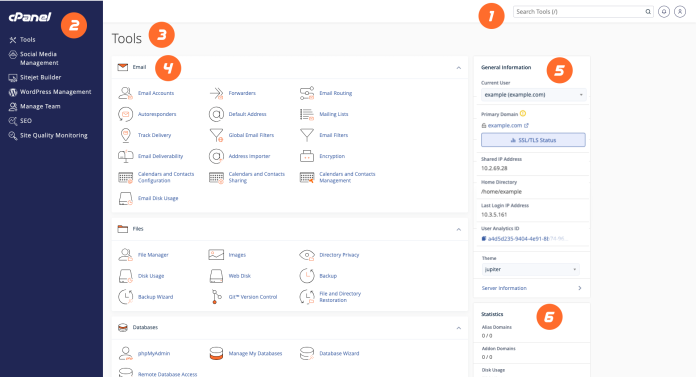
A tour of the cPanel dashboard: Key features explained

0

How to Log In to Your cPanel or Plesk Account

Logging in to your control panel is the first step to managing your website, email, files, and more. Whether you’re using cPanel or Plesk, the process is pretty straightforward. Here’s how to do it:


How to Log In to cPanel

Option 1: Using a Direct Link

  1. Open your web browser.
  2. Enter your cPanel login URL.
    This is usually one of the following:

    • http://yourdomain.com/cpanel
    • https://yourdomain.com:2083 (the secure, direct port)
  3. Press Enter.
  4. Enter your username and password.
    These details are typically sent to you by your hosting provider when you sign up. If you’re not sure, check your welcome email or contact your host’s support team.
  5. Click “Log in.”
    You should now see your cPanel dashboard!

Tip: If your domain hasn’t propagated yet or you’re having trouble, you can also use your server’s IP address instead of your domain:

  • http://[server IP]:2082 (insecure)
  • https://[server IP]:2083 (secure)

How to Log In to Plesk

Option 1: Using a Direct Link

  1. Open your web browser.
  2. Enter your Plesk login URL.
    This typically looks like:

    • https://yourdomain.com:8443
    • Or, using your server’s IP address: https://[server IP]:8443
  3. Press Enter.
  4. Enter your username and password.
    Again, these are usually provided by your web host in their welcome email.
  5. Click “Log in.”
    You’ll be taken to the Plesk dashboard.

Tip: If you’ve forgotten your credentials, most hosts offer a “Forgot Password?” link or you can contact their support for help.


Troubleshooting Tips

  • Login not working? Double-check your username and password for typos.
  • Site won’t load? Make sure you’re using the correct URL and port numbers (cPanel: 2083, Plesk: 8443).
  • Still stuck? Reach out to your hosting provider’s support team—they’re there to help!

Final Thoughts

Accessing your cPanel or Plesk account is usually as simple as entering the right web address and your login details. Once you’re in, you’ll have all the tools you need to manage your website at your fingertips.

How to log in to your cPanel or Plesk account.

0

How to Log In to Your cPanel or Plesk Account

Logging in to your control panel is the first step to managing your website, email, files, and more. Whether you’re using cPanel or Plesk, the process is pretty straightforward. Here’s how to do it:


How to Log In to cPanel

Option 1: Using a Direct Link

  1. Open your web browser.
  2. Enter your cPanel login URL.
    This is usually one of the following:

    • http://yourdomain.com/cpanel
    • https://yourdomain.com:2083 (the secure, direct port)
  3. Press Enter.
  4. Enter your username and password.
    These details are typically sent to you by your hosting provider when you sign up. If you’re not sure, check your welcome email or contact your host’s support team.
  5. Click “Log in.”
    You should now see your cPanel dashboard!

Tip: If your domain hasn’t propagated yet or you’re having trouble, you can also use your server’s IP address instead of your domain:

  • http://[server IP]:2082 (insecure)
  • https://[server IP]:2083 (secure)

How to Log In to Plesk

Option 1: Using a Direct Link

  1. Open your web browser.
  2. Enter your Plesk login URL.
    This typically looks like:

    • https://yourdomain.com:8443
    • Or, using your server’s IP address: https://[server IP]:8443
  3. Press Enter.
  4. Enter your username and password.
    Again, these are usually provided by your web host in their welcome email.
  5. Click “Log in.”
    You’ll be taken to the Plesk dashboard.

Tip: If you’ve forgotten your credentials, most hosts offer a “Forgot Password?” link or you can contact their support for help.


Troubleshooting Tips

  • Login not working? Double-check your username and password for typos.
  • Site won’t load? Make sure you’re using the correct URL and port numbers (cPanel: 2083, Plesk: 8443).
  • Still stuck? Reach out to your hosting provider’s support team—they’re there to help!

Final Thoughts

Accessing your cPanel or Plesk account is usually as simple as entering the right web address and your login details. Once you’re in, you’ll have all the tools you need to manage your website at your fingertips.

cPanel vs. Plesk: Which control panel is better?

0

cPanel vs. Plesk: Which Control Panel is Better?

If you’re setting up a website and digging into web hosting options, you’ll almost certainly encounter two big names: cPanel and Plesk. Both are powerful control panels designed to make managing your website, domains, email, and server settings much easier. But which one is right for you? Let’s break down the key differences, benefits, and potential drawbacks of each—so you can make an informed decision.


User Interface & Ease of Use

  • cPanel:
    Boasts a classic, icon-based dashboard that’s straightforward and familiar to many. It separates admin (WHM) and user panels, which can be handy for hosting providers or advanced users, but might feel a bit fragmented for beginners.
  • Plesk:
    Known for its modern, clean, and unified interface. Everything—from website files to email and security—is managed from a single, cohesive dashboard. Many users find Plesk’s layout more intuitive, particularly if they’re new to web hosting.

Operating System Support

  • cPanel:
    Primarily designed for Linux-based servers (think CentOS, CloudLinux, Ubuntu). If you’re set on Windows hosting, cPanel isn’t an option.
  • Plesk:
    Works seamlessly on both Linux and Windows servers, making it versatile for a broader range of hosting environments.

Features & Extensions

  • cPanel:
    Offers all the essentials: file management, email setups, database tools, security settings, and one-click app installations (like WordPress). It’s reliable and widely supported, with a huge knowledge base and community.
  • Plesk:
    Includes similar core features but stands out for its extension ecosystem. With tools like the WordPress Toolkit, integrated security options, and a marketplace for add-ons, Plesk is highly customizable. It’s also designed for easier management of multiple sites and users.

Security

Both panels offer strong security features—SSL certificate management, firewalls, backups, and more. Plesk’s security suite is a bit more tightly integrated, but cPanel offers robust third-party plugin support.


Performance & Resource Usage

  • Both are optimized for speed and reliability.
  • Some users say cPanel feels a bit lighter, but the difference is marginal for most modern servers.

Pricing

  • cPanel:
    Recently, cPanel’s pricing has increased and is now based on the number of accounts, which can get expensive for resellers or agencies managing many small websites.
  • Plesk:
    Offers tiered pricing as well, with some plans that may be more cost-effective for users with multiple domains or WordPress sites.

Who Should Use Which?

  • Choose cPanel if:
    • You’re hosting on Linux and value familiarity or widespread support.
    • You want a mature platform with tons of tutorials and community help.
    • You’re already used to cPanel from previous hosting experiences.
  • Choose Plesk if:
    • You need Windows hosting or want flexibility between Windows and Linux.
    • A modern, unified interface is important to you.
    • You’re managing multiple sites (especially with WordPress) or want easy user/client management.
    • You want to take advantage of a wide range of built-in extensions.

Final Verdict

There’s no one-size-fits-all answer—both cPanel and Plesk are excellent choices for website and server management. Your decision should come down to your specific needs: operating system, interface preference, budget, and the scale at which you’re managing sites. If possible, try out demos of both panels before committing. Ultimately, the “better” control panel is the one that feels right for you and supports your workflow with ease.

What is Plesk? An introduction to the control panel.

0

What is Plesk? An Introduction to the Control Panel

If you’re exploring web hosting, you’ve probably heard names like cPanel and Plesk tossed around. While cPanel is common (especially on Linux servers), Plesk is another popular control panel that’s gaining traction—especially for those looking for flexibility and a modern interface. But what exactly is Plesk, and how does it help you manage your website? Let’s dive in.


What is Plesk?

Plesk is a web hosting control panel—essentially, a user-friendly dashboard that lets you manage your website, domains, email accounts, and server settings without needing deep technical skills. It streamlines complex tasks with easy-to-use menus and icons, making web management accessible for beginners and powerful enough for pros.


What Makes Plesk Stand Out?

  • Cross-Platform Compatibility: Plesk works seamlessly on both Linux and Windows servers, giving you more flexibility based on your website’s needs.
  • Modern, Intuitive Interface: Its clean design and logical layout make navigation straightforward, even for first-timers.
  • Wide Range of Features: From website and email management to advanced security and application installations, Plesk covers it all.
  • Extension Ecosystem: You can enhance Plesk with a marketplace full of add-ons and integrations, such as WordPress Toolkit, security tools, and more.

Key Features of Plesk

Here’s what you can typically do with Plesk:

1. Website & Domain Management

Add or remove domains and subdomains, organize files, and manage DNS settings—all from one place.

2. One-Click Application Installations

Install popular software like WordPress, Joomla, or Drupal with just a single click, thanks to the built-in application installer.

3. Email Management

Create and manage professional email addresses (like yourname@yourdomain.com), set up autoresponders and spam filters.

4. Security Tools

Protect your site with SSL certificates, firewalls, password-protected directories, and regular security scans.

5. Database Management

Easily set up and manage databases using MySQL or other database systems, essential for running dynamic websites.

6. Backup & Restore

Schedule automatic backups or create manual ones, so your data is always safe and recoverable.

7. User Management

Perfect for agencies or resellers, Plesk allows you to create user accounts with custom permissions for clients or team members.


Accessing Plesk

After signing up for hosting that includes Plesk, your provider will typically send a login link (like https://yourdomain.com:8443). Once logged in, you’ll see the Plesk dashboard with all the tools you need to manage your web presence.


Plesk vs. cPanel: What’s the Difference?

  • Operating System Support: Plesk works on both Windows and Linux, while cPanel is mainly for Linux.
  • User Interface: Both are user-friendly, but some find Plesk’s design more modern and intuitive.
  • Features & Extensions: Both offer robust feature sets, but Plesk’s extension marketplace is particularly strong for users who want to customize their control panel.

Why Choose Plesk?

  • Great for agencies, developers, and beginners alike
  • Supports both Windows and Linux environments
  • Easy management of multiple sites and users
  • Strong focus on security and automation

Final Thoughts

If you’re looking for a control panel that balances simplicity with powerful features—and works across multiple platforms—Plesk is an excellent choice. Whether you’re managing one website or many, it streamlines the process so you can focus on growing your online presence, not wrestling with technical details.

What is cPanel? A complete guide for beginners.

0

What is cPanel? A Complete Guide for Beginners

If you’ve recently started a website or are considering launching one, you’ve probably come across the term “cPanel.” But what exactly is it, and why do so many web hosts mention it? Let’s break it down together.


What is cPanel?

At its core, cPanel is a web-based control panel that helps you manage your website and hosting account easily, without needing to be a tech wizard. Think of it as the dashboard for your website: a user-friendly interface where you can handle everything from emails to files to domains, all in one place.


Why is cPanel Popular?

  • User-Friendly: No need to memorize complicated commands or code. cPanel uses icons and menus, making it intuitive even for beginners.
  • Widely Supported: Most shared hosting providers include cPanel because it’s reliable and well-known.
  • Powerful Tools: It offers a range of built-in features that cover almost every aspect of website management.

Key Features of cPanel

Let’s take a look at what you can do with cPanel:

1. File Management

Upload, download, or organize website files using the built-in File Manager—no need for separate FTP software.

2. Email Management

Create and manage email accounts (like you@yourwebsite.com), set up forwarders, autoresponders, and spam filters.

3. Domain Management

Add new domains or subdomains, manage DNS settings, and set up redirects.

4. Database Management

Easily create and manage databases (using MySQL or PostgreSQL), which are essential for dynamic websites like blogs or online stores.

5. Software Installation

Install popular applications like WordPress, Joomla, or Drupal with just a few clicks, thanks to tools like Softaculous.

6. Security Tools

Set up SSL certificates, block IP addresses, and manage password-protected directories to keep your site safe.

7. Backups

Create and manage backups of your site and databases, so you can restore them if something goes wrong.

8. Statistics and Analytics

Monitor website traffic, resource usage, and error logs to keep your site running smoothly.


How Do You Access cPanel?

Most web hosts will send you a cPanel login link after you sign up. It usually looks like this:
https://yourdomain.com/cpanel

Just enter your username and password, and you’ll be greeted by the cPanel dashboard.


Common Tasks You Can Do in cPanel

  • Set up a new email address
  • Change your website’s password
  • Create a backup before making changes
  • Install a new content management system (like WordPress)
  • Upload images or documents to your site

Tips for Beginners

  • Explore, but be careful: cPanel is designed to be user-friendly, but some settings can affect your website if changed incorrectly. Don’t be afraid to look around, but always double-check before saving changes.
  • Use built-in help: Most areas in cPanel have helpful descriptions and links to documentation.
  • Regular backups: Before making major changes, create a backup so you can easily restore your site if needed.

Final Thoughts

cPanel takes the mystery out of website management. Even if you’re brand new to running a website, this control panel empowers you to handle essential tasks with just a few clicks. As you become more comfortable, you’ll find that cPanel is an invaluable tool for keeping your site running smoothly.

The relationship between website speed and conversion rates.

0

In the digital age, patience is a rare commodity—especially online. Have you ever clicked a link, only to wait several seconds for the page to load, and then abandoned it for something faster? If so, you’re not alone. Website speed isn’t just a technical detail; it’s a make-or-break factor for user experience and, ultimately, your bottom line.

First Impressions Count (A Lot)

When a site loads slowly, it sends a subtle message: this brand doesn’t value your time. Studies consistently show that users form opinions about a website within seconds. In fact, research from Google suggests that as page load time increases from one to five seconds, the probability of a visitor bouncing increases by 90%. That’s a huge loss of potential customers before they even see what you offer.

Speed Directly Impacts Conversion Rates

Conversion rate—the percentage of visitors who complete a desired action (like making a purchase or filling out a form)—is intimately tied to site speed. According to a study by Akamai, a one-second delay in page response can result in a 7% reduction in conversions. Imagine running an online store that makes $1,000 per day; a single second delay could potentially cost $25,000 in lost sales each year.

Why Does Speed Matter So Much?

  • User Experience: Fast sites feel intuitive and trustworthy. People want to get things done quickly, and a snappy website makes that possible.
  • Mobile Traffic: With more users browsing on mobile devices, where connections can be less reliable, every millisecond counts.
  • Competitive Edge: If your competitor’s site is faster, users are more likely to buy from them instead.

It’s Not Just About Sales

While e-commerce sites see the most direct correlation, speed matters for all types of conversions—newsletter sign-ups, downloads, inquiries, and beyond. Nonprofits, bloggers, and service providers all benefit from faster sites, since users are more likely to engage when things run smoothly.

How to Improve Website Speed

Here are a few practical tips:

  • Optimize images for the web to reduce file size without sacrificing quality.
  • Minimize code by compressing CSS, JavaScript, and HTML files.
  • Leverage browser caching so repeat visitors load your site faster.
  • Use a reliable hosting provider and consider a Content Delivery Network (CDN) to serve content closer to users.

The Bottom Line

Website speed isn’t just a technical metric—it’s a critical part of your user’s journey and a key driver of conversion rates. In a world where attention spans are shrinking, investing in a faster website is one of the most effective ways to keep visitors happy and boost your business outcomes.

So next time you think about site improvements, remember: every second counts.

How to identify and fix performance bottlenecks

0

How to Identify and Fix Website Performance Bottlenecks

Ever had that feeling that your website is just… slow, but you’re not sure why? You’re not alone! Performance bottlenecks are common, but the good news is they can almost always be found—and fixed—with a bit of detective work.

Here’s a step-by-step approach to pinpointing what’s slowing you down, and what you can do to speed things up.


Step 1: Measure and Benchmark Your Website

Before you can fix a problem, you need to see where it’s happening. Use tools like:

  • Google PageSpeed Insights: Gives scores and highlights specific issues.
  • GTmetrix: Shows load times, waterfall charts, and recommendations.
  • WebPageTest: Lets you simulate different locations and devices.
  • Browser DevTools (Network tab): See how every asset loads in real time.

Tip: Always test from multiple devices and locations. What’s fast on your home Wi-Fi might be sluggish on mobile or overseas.


Step 2: Analyze the Results and Find Bottlenecks

Look for common pain points:

  • High Time to First Byte (TTFB): Indicates slow server response—could be hosting, server configuration, or heavy backend processes.
  • Large images or videos: Media files that aren’t optimized will drag down load times.
  • Too many HTTP requests: Every image, script, or style file is a separate request. Lots of these slow things down.
  • Render-blocking resources: CSS or JavaScript files that prevent the page from displaying until they’re fully loaded.
  • Heavy third-party scripts: Ads, analytics, chat widgets, and embeds can all be culprits.
  • Database slowdowns: Poorly optimized queries, bloated tables, or lack of caching can choke performance.

Waterfall charts in GTmetrix or WebPageTest are especially helpful—they show you exactly what loads when, and what’s holding up the rest.


Step 3: Fix What’s Slowing You Down

Here’s how to tackle the most common bottlenecks:

1. Server/Hosting Issues

  • Upgrade your hosting: Move from shared to VPS or managed hosting.
  • Use a CDN: Offload static assets to servers closer to your users.
  • Optimize server configuration: Enable gzip compression, HTTP/2/3, and keep PHP/MySQL versions up to date.

2. Images and Videos

  • Compress images: Use tools like TinyPNG or plugins like Smush (WordPress).
  • Serve responsive images: Use srcset for different screen sizes.
  • Enable lazy loading: Load images/videos only when they’re about to appear on screen.

3. Too Many Requests

  • Combine files: Bundle CSS and JS where possible.
  • Minify assets: Remove whitespace/comments from CSS, JS, and HTML.
  • Remove unnecessary plugins/scripts: Audit regularly and keep only what you need.

4. Render-Blocking Resources

  • Defer or async JavaScript: So it loads after the main content.
  • Inline critical CSS: So the page can render before all stylesheets load.

5. Third-Party Scripts

  • Load scripts asynchronously: So they don’t block your page.
  • Remove or replace heavy scripts: Only use what’s essential.

6. Database Performance

  • Clean up and optimize tables: Use plugins or direct SQL commands.
  • Cache queries: Use object/page caching.
  • Fix slow queries: Add indexes or refactor problem queries.

Step 4: Test Again, and Repeat

After making changes, re-test your site. Did the scores improve? Are pages loading faster? Sometimes fixing one bottleneck reveals another, so keep refining.


In Summary

Finding and fixing performance bottlenecks is a cycle: measure, analyze, fix, and measure again. With a systematic approach—and the right tools—you can turn a sluggish site into a speed machine. And remember: a faster site isn’t just better for your visitors, it’s better for your search rankings and your business too.

Choosing a lightweight theme for your CMS.

0

How to Choose a Lightweight Theme for Your CMS

A theme sets the tone for your website’s look and feel—but it also plays a huge role in how fast your site loads and how smoothly it runs. Lightweight themes are designed to be simple, fast, and bloat-free, giving you a solid foundation for speed and SEO (without sacrificing style). Here’s how to pick the perfect one for your site:


1. Focus on Simplicity and Speed

  • Minimal features, maximum performance:
    The more features and bundled plugins a theme has, the heavier it usually is. Look for themes that offer just what you need—no more, no less.
  • Check the demo:
    Visit the theme’s live demo. Does it load quickly? If it feels snappy there, it’s likely to perform well on your site too.

2. Check Theme Size and Code Quality

  • Theme file size:
    A lightweight theme’s zipped file is often under 1MB. While this isn’t a strict rule, it’s a helpful benchmark.
  • Well-coded themes:
    Lightweight themes use clean, modern code (HTML5, CSS3, minimal JavaScript) and avoid unnecessary libraries or frameworks.

3. Compatibility With Caching and Optimization Plugins

  • Test or look for reviews confirming that the theme plays nicely with popular caching plugins (like WP Super Cache, W3 Total Cache) and image optimization tools.
  • Good themes don’t interfere with other speed-boosting tools you might use.

4. Responsive and Accessibility-Ready

  • Mobile optimization:
    A good lightweight theme is fully responsive, meaning it adapts to all screen sizes without extra bloat.
  • Accessibility:
    Look for themes that follow accessibility best practices (e.g., proper heading structure, ARIA labels).

5. Regular Updates and Community Support

  • Active development:
    Choose themes that are regularly updated for security and compatibility with the latest CMS versions.
  • Support and documentation:
    Even the simplest theme is better with clear documentation and a helpful support forum.

6. Popular Lightweight Theme Examples

For WordPress:

  • Astra: Highly customizable, under 50KB on the frontend.
  • GeneratePress: Famous for speed and simplicity.
  • Neve: Fast, easy to use, and great for most sites.
  • Hello Elementor: Minimal base for Elementor users.

For Joomla:

  • Helix Ultimate: Lightweight and flexible.
  • JD Boston: Clean and performance-oriented.

For Drupal:

  • Bartik: The default, and quite lean.
  • Bootstrap-based themes: Often lightweight out of the box.

7. Avoid Feature Overload

  • Don’t get tempted by “all-in-one” solutions:
    Multipurpose themes with built-in sliders, page builders, and dozens of options may look great, but they can slow your site down.
  • Use plugins instead:
    For extra features, opt for plugins—this way, you only load what you actually use.

8. Test Before Committing

  • Use speed testing tools:
    Upload the theme to a staging site and run it through Google PageSpeed Insights, GTmetrix, or WebPageTest.
  • Check for unused CSS/JS:
    Some themes load unnecessary styles/scripts. Tools like PurifyCSS or Chrome DevTools can help you spot this.

In Summary

A lightweight theme is the secret sauce for a fast, user-friendly website. Stick to well-reviewed, actively maintained options, and prioritize performance over flashy features. Your visitors (and Google) will thank you for it!

How to optimize your website’s database

0

How to Optimize Your Website’s Database: A Simple Guide

Your website’s database is like the heart of your site: it stores all your posts, user info, settings, and more. Over time, just like a busy kitchen, it can get cluttered and slow, which can drag down the speed of your entire website. Regular database optimization is one of those behind-the-scenes tricks that can make a world of difference, especially as your site grows.

Here’s how you can keep your database clean, lean, and lightning-fast:


1. Clean Up Unused Data

  • Delete old drafts, revisions, and trashed posts
    Content management systems like WordPress save every draft and revision. These pile up fast! Regularly empty the trash and prune unnecessary revisions.
  • Remove spam and unapproved comments
    Spam comments and pending comments can bloat your database. Clear them out from time to time.
  • Uninstall unused plugins and themes
    Plugins and themes often leave behind tables or entries. After uninstalling, use a cleanup tool to remove orphaned data.

2. Optimize Database Tables

  • Use built-in database optimization tools
    Most databases (like MySQL) have an OPTIMIZE TABLE command, which reclaims unused space and defragments tables.

    • For WordPress, plugins like WP-Optimize or Advanced Database Cleaner can do this with one click.
    • For manual optimization, you can use a tool like phpMyAdmin. Select your database, tick the tables, and choose “Optimize table” from the dropdown.

3. Limit Post Revisions and Auto-saves

  • Set a reasonable limit for post revisions
    In WordPress, you can add this to your wp-config.php file:

    php
    define('WP_POST_REVISIONS', 5); // Keep only 5 revisions per post
    
  • Adjust auto-save intervals
    This reduces the number of unnecessary auto-saved drafts.

4. Regularly Backup Your Database

  • Backups aren’t just for emergencies—they’re also a safety net when optimizing.
    Always back up your database before making big changes. Tools like UpdraftPlus (WordPress) or your host’s control panel make this easy.

5. Remove Transients and Temporary Data

  • Transients are temporary options stored in the database by plugins for caching or scheduling.
  • Over time, expired transients can accumulate. Use a plugin like Transient Cleaner (WordPress) or run custom SQL queries to remove them.

6. Optimize Queries and Indexes

  • Review slow or complex queries
    Use tools like Query Monitor (for WordPress) or enable slow query logging in MySQL to spot bottlenecks.
  • Add indexes to frequently queried columns
    Indexes speed up data retrieval, especially for large tables. But don’t overdo it—too many indexes can slow down writes.

7. Archive or Delete Old Data

  • If your site has lots of old logs, session data, or analytics, consider exporting and archiving them offline—or deleting what you no longer need.

8. Schedule Regular Maintenance

  • Set a recurring reminder to optimize your database monthly or quarterly, depending on your site’s size and activity.

In Summary

A well-optimized database keeps your website humming along smoothly, improves page load times, and reduces the risk of crashes as your content grows. Most optimization steps can be automated or handled with a few clicks or simple SQL commands.

Treat your database with care, and your website (and visitors) will thank you!

The difference between HTTP/2 and HTTP/3 and their impact on speed

0

The Difference Between HTTP/2 and HTTP/3—And How They Impact Speed

If you’re interested in making your website faster (and who isn’t?), you’ve probably seen buzz about HTTP/2 and HTTP/3. But what are they, how do they differ, and why should you care? Let’s break it down in simple terms.


What Are HTTP/2 and HTTP/3?

HTTP (HyperText Transfer Protocol) is the foundation of data communication on the web. It defines how browsers and servers talk to each other. HTTP/1.1—the version most people used for years—was designed in the 1990s. As the web grew, it started to show its age.

That’s where HTTP/2 and HTTP/3 come in: both are newer versions designed to speed things up and make your online experience smoother.


HTTP/2: The Big Improvements

Released in 2015, HTTP/2 brought several big upgrades over HTTP/1.1:

  • Multiplexing: Multiple requests and responses can be sent at the same time over a single connection. In HTTP/1.1, each request needed its own connection or had to wait its turn (causing bottlenecks).
  • Header Compression: HTTP/2 compresses request and response headers, reducing the amount of data sent.
  • Server Push: The server can send resources (like CSS or JS files) to the browser before it even asks, anticipating what’s needed.
  • Binary Protocol: HTTP/2 uses binary rather than text-based communication, which is more efficient for computers to process.

Impact on Speed:
Sites that switch to HTTP/2 often see faster load times, especially for pages with lots of images or scripts. Multiplexing is a game-changer for busy websites.


HTTP/3: The Next Level

HTTP/3 is even newer (officially standardized in 2022) and takes a different approach:

  • Based on QUIC: While HTTP/2 uses TCP (Transmission Control Protocol), HTTP/3 is built on QUIC, a protocol developed by Google that uses UDP (User Datagram Protocol). This is a big deal!
  • Faster Handshakes: HTTP/3/QUIC reduces the “handshake” time—it takes fewer steps for browsers and servers to start talking, which means less waiting, especially on mobile networks.
  • Built-in Encryption: QUIC was designed for secure connections from the start.
  • Better Handling of Packet Loss: If some data packets get lost (very common on real-world networks), HTTP/3 can recover more gracefully without forcing everything to wait or retry.

Impact on Speed:
HTTP/3 shines on unreliable or high-latency connections—think mobile users, public Wi-Fi, or international visitors. For many users, this means pages load even faster and feel more responsive, especially when network conditions aren’t perfect.


Quick Comparison Table

FeatureHTTP/2HTTP/3
Underlying ProtocolTCPQUIC (over UDP)
MultiplexingYesYes
Server PushYesYes
Handshake SpeedFastEven Faster
Built-in EncryptionOptional (TLS)Mandatory
Packet Loss RecoveryBasicAdvanced
Browser SupportBroadGrowing (now strong)

Should You Upgrade?

  • Most modern browsers support both HTTP/2 and HTTP/3.
  • Many major CDNs and hosts already offer HTTP/3 (or are rolling it out).
  • Users on fast, stable networks may not notice a huge difference between HTTP/2 and HTTP/3, but users on spotty or high-latency connections will likely see improvements with HTTP/3.

Bottom line:
Upgrading your site to support HTTP/2 is a must for modern performance. Enabling HTTP/3 is a smart next step, especially if your audience includes lots of mobile or international users.


In Short

HTTP/2 and HTTP/3 are like turbochargers for your website’s engine. HTTP/2 brought big improvements over the old standard, while HTTP/3 takes it even further, especially for users on less-than-perfect networks. By enabling both, you’re giving your visitors the fastest, smoothest experience possible—no matter how (or where) they connect.