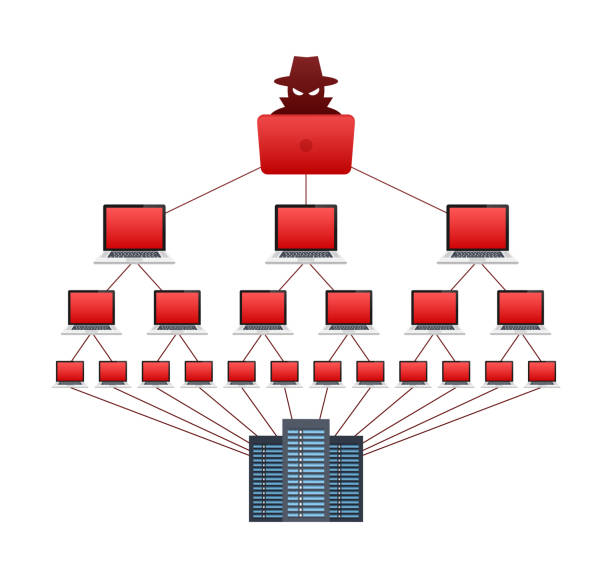

Every second, thousands of websites around the world are targeted by cyberattacks. Some attacks are designed to steal sensitive information, while others aim for something much simpler but equally damaging: making your website unavailable to legitimate visitors. One of the most common and disruptive forms of cyberattack is the Distributed Denial-of-Service (DDoS) attack.
Whether you run an online store, a corporate website, a school portal, a government platform, or a personal blog, a DDoS attack can interrupt your services, damage your reputation, and cost your business thousands of dollars in lost revenue. As businesses become increasingly dependent on their online presence, understanding DDoS attacks has become essential for every website owner.
Fortunately, modern security solutions such as Tremhost Armor, powered by Cloudflare, provide enterprise-grade DDoS protection that keeps websites online even during large-scale attacks.
Understanding a DDoS Attack
A Distributed Denial-of-Service (DDoS) attack occurs when thousands—or even millions—of internet-connected devices simultaneously send enormous amounts of traffic to a website or online service.
Unlike normal website traffic generated by real users, DDoS traffic is malicious. The goal is not to browse your website or make a purchase but to overwhelm your server with requests until it can no longer respond. When this happens, legitimate visitors experience slow loading times, connection errors, or complete website outages.
The word “distributed” is important because the attack originates from many different devices located across the world rather than from a single computer. These devices often belong to a botnet, a network of computers, servers, or Internet of Things (IoT) devices that have been infected with malware and secretly controlled by cybercriminals.
Because attacks come from thousands of different locations simultaneously, blocking them manually becomes extremely difficult without specialized protection.
How DDoS Attacks Work
Imagine owning a small restaurant with seating for fifty customers. On a normal day, genuine customers walk in, order food, and enjoy their meals.
Now imagine thousands of people suddenly enter the restaurant—not because they want to eat, but simply to occupy every available seat and block the entrance. Real customers cannot get inside, your staff cannot serve anyone, and your business effectively stops operating.
This is exactly what happens during a DDoS attack.
Instead of filling chairs, attackers flood your web server with fake requests until its resources—such as CPU power, memory, bandwidth, or network connections—are exhausted. Once those resources are consumed, your website becomes unavailable to legitimate users.
Why Cybercriminals Launch DDoS Attacks
There are many reasons attackers perform DDoS attacks, and not all of them involve large corporations.
Some attackers seek financial gain by demanding payment to stop the attack. Others attempt to disrupt competitors, while some launch attacks simply for notoriety or as part of larger hacking campaigns.
Online retailers may be attacked during major sales events to interrupt business operations. Educational institutions often experience attacks during examination periods. Government agencies may become targets for political reasons, while gaming platforms frequently face attacks from disgruntled players.
Regardless of the motivation, the outcome is usually the same: downtime, frustrated users, and financial losses.
The Different Types of DDoS Attacks
Modern DDoS attacks come in several forms, each targeting different parts of your infrastructure.
Volumetric attacks attempt to consume all available internet bandwidth by generating enormous amounts of traffic. These attacks are among the largest ever recorded and can involve terabits of malicious data every second.
Protocol attacks focus on exhausting server resources by exploiting weaknesses in networking protocols. Even websites with significant bandwidth can become unavailable if their servers are overwhelmed by protocol-based attacks.
Application-layer attacks target the website itself rather than the network. Instead of flooding servers with meaningless traffic, attackers repeatedly request pages, search functions, login portals, or shopping carts until the web application becomes overloaded. These attacks are particularly dangerous because they often resemble legitimate user behavior.
Effective protection requires defenses against all three attack types.
Warning Signs That Your Website May Be Under Attack
Many business owners initially assume their hosting provider is experiencing technical difficulties when, in reality, their website is under active attack.
One of the first warning signs is an unexpected slowdown in website performance. Pages that normally load within seconds suddenly become sluggish or fail entirely.
You may also notice frequent timeout errors, unusually high server resource usage, or spikes in bandwidth consumption. Visitors might report receiving “503 Service Unavailable” or “Connection Timed Out” messages, while your hosting dashboard may indicate abnormal traffic levels.
If these symptoms appear suddenly without a corresponding increase in genuine visitors, a DDoS attack may be occurring.
The Business Impact of Website Downtime
Website downtime affects far more than technical performance.
For eCommerce businesses, every minute of downtime means lost sales and abandoned shopping carts. Service-based companies lose inquiries and customer trust, while news websites, educational institutions, and nonprofit organizations may be unable to serve their audiences during critical periods.
Beyond immediate financial losses, repeated outages can damage your brand’s reputation. Customers expect websites to be available whenever they need them. If your website frequently becomes inaccessible, many visitors will simply choose a competitor instead.
Search engines also monitor website availability. Prolonged downtime may reduce search engine visibility, impacting your long-term digital marketing efforts.
Why Traditional Hosting Alone Is Not Enough
Many people assume their hosting provider automatically protects them against every cyberattack.
While quality hosting providers maintain secure infrastructure, most hosting servers are not designed to absorb the enormous traffic volumes generated during modern DDoS attacks.
If malicious traffic reaches your server directly, it must compete with legitimate users for the same resources. Eventually, even powerful servers can become overwhelmed.
This is why dedicated DDoS mitigation services have become an essential layer of website security.
How Tremhost Armor Stops DDoS Attacks
Tremhost Armor uses Cloudflare’s globally distributed network to intercept malicious traffic before it reaches your website.
Instead of connecting directly to your hosting server, visitors first connect to Cloudflare’s edge network, which spans hundreds of data centers worldwide.
Every incoming request is analyzed in real time. Intelligent systems identify suspicious behavior, malicious bots, abnormal traffic patterns, and known attack signatures. Harmful traffic is blocked immediately, while legitimate visitors continue accessing your website without interruption.
Because attacks are absorbed across Cloudflare’s massive global infrastructure, your origin server remains protected even during extremely large-scale attacks.
This proactive approach ensures that your business remains online while attackers waste their resources against Cloudflare’s protective network rather than your website.
Additional Layers of Protection
DDoS protection is only one part of a comprehensive security strategy.
Tremhost Armor also provides professionally configured SSL certificates, secure DNS management, origin IP protection, managed Web Application Firewall (WAF) rules, rate limiting, intelligent caching, and performance optimization.
Together, these technologies create multiple layers of defense that significantly reduce your website’s exposure to cyber threats while improving loading speed and reliability.
Instead of relying on a single security feature, Tremhost Armor delivers comprehensive protection that adapts to modern attack techniques.
Emergency Protection When Every Minute Counts
Sometimes attacks begin without warning.
For businesses already experiencing an active cyberattack, Tremhost Armor SOS provides rapid emergency response.
Our team performs an accelerated DNS cutover to Cloudflare, enables Under Attack Mode, deploys emergency firewall rules, implements aggressive rate limiting, rotates compromised origin IP addresses when necessary, and delivers a detailed post-incident report explaining exactly what occurred.
This rapid response minimizes downtime and helps businesses recover quickly while strengthening their defenses against future attacks.
Don’t Wait Until Your Website Goes Offline
The unfortunate reality is that every website connected to the internet is constantly being scanned by automated bots looking for vulnerabilities. It is no longer a question of if your website will be targeted, but when.
Investing in DDoS protection before an attack occurs is significantly less expensive than recovering from prolonged downtime, lost sales, damaged customer confidence, and emergency technical work.
With Tremhost Armor powered by Cloudflare, businesses gain enterprise-grade DDoS protection, professional security management, and the confidence that their websites remain available even when cybercriminals attempt to bring them down.
Your website is one of your business’s most valuable assets. Protect it before attackers have the opportunity to exploit it.