
Have you ever wondered how much your favorite creators make when you click on their videos? Or maybe you are an aspiring creator trying to figure out if your video ideas can turn into a sustainable paycheck.
There is a common misconception that YouTube pays a flat fee for every individual person who watches a video. In reality, the math is a bit more complex.
Here is a direct breakdown of what YouTube actually pays per view, how it changes based on what you upload, and the hidden factors that control the paycheck.
The Short Answer: The Pay-Per-View Estimate
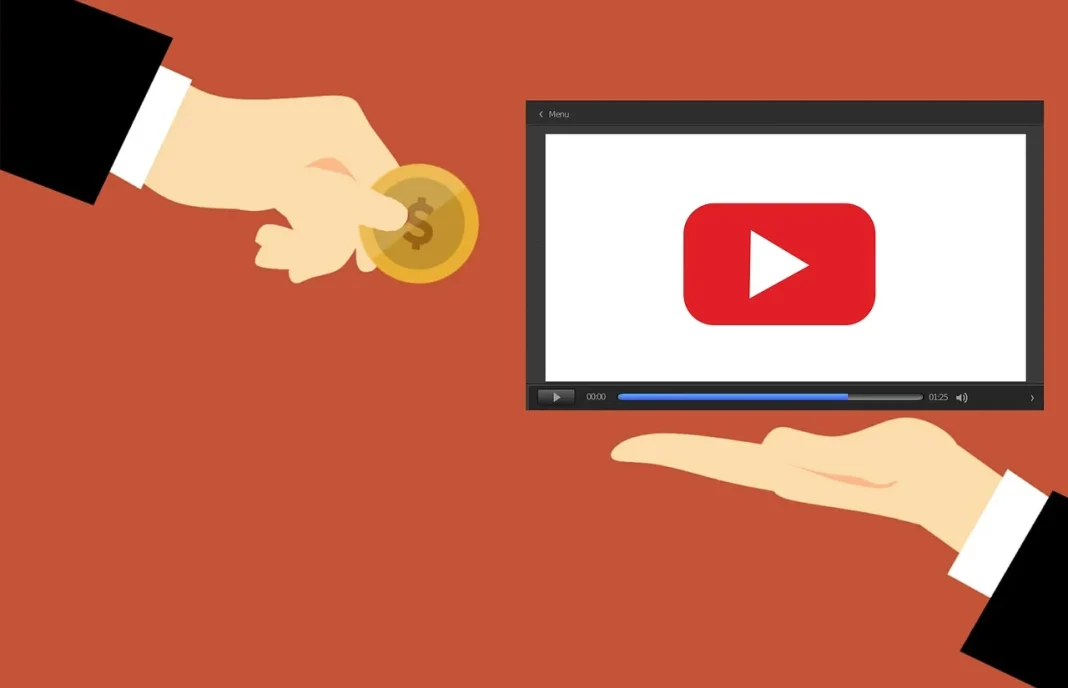
YouTube does not pay a fixed rate per viewer. Instead, on average, most creators earn between $0.002 and $0.012 per individual view for traditional long-form content.
Because an individual view pays a tiny fraction of a single cent, the platform calculates earnings using a metric called RPM (Revenue Per Mille). This tracks the total money a creator makes per 1,000 views after YouTube takes its 45% platform cut.
For most standard videos, this translates to roughly $2 to $12 per 1,000 views.
Long-Form vs. Shorts vs. Music: Payouts by Format
How much money a viewer generates changes drastically depending on the format of the content they are watching. Not all views are created equal:
- Long-Form Videos ($2 to $12+ per 1,000 views): Traditional horizontal videos remain the most profitable format on the platform. Because the videos are longer, YouTube can place multiple ads throughout the video (pre-roll, mid-roll, and post-roll), drastically multiplying the revenue potential.
- Official Music Tracks ($1.64 to $7.10 per 1,000 streams): Music payouts depend heavily on where the music is played. Audio-only streaming on the premium YouTube Music app pays on the higher end (closer to $7 per 1k plays). Automated “Art Tracks” on automated Topic channels or standard music videos fetch closer to $1.64 per 1k views.
- YouTube Shorts ($0.04 to $0.08 per 1,000 views): While it is incredibly easy to rack up millions of views on short, vertical videos, they pay the least. This is because Shorts do not have individual ads attached to them. Instead, all ad revenue from the Shorts Feed is pooled together and split among creators based on their share of total views.
The 3 Hidden Variables That Dictate Your Pay
Two different YouTube channels can both upload a video that gets exactly 100,000 views, yet one channel might make $200 while the other makes $2,000. This massive gap happens because of three critical variables:
1. Your Content Niche
Advertisers bid on keywords to place ads on specific types of videos. If your channel covers a topic where viewers are likely to spend big money, advertisers will pay a premium to be there.
- High-Paying Niches: Finance, business, tech, and real estate channels command the highest RPMs (often $15 to $30+ per 1,000 views).
- Lower-Paying Niches: Comedy, gaming, vlogs, and general entertainment channels have much lower RPMs (typically $1 to $4 per 1,000 views).
2. Viewer Location
Where your audience lives matters just as much as what they are watching. Advertisers pay significantly more to target viewers in “Tier 1” countries with high purchasing power. A view from the United States, United Kingdom, Canada, or Australia generates a much higher payout than a view from a developing economy.
3. Ad Blocks vs. Premium Users
YouTube only pays creators when a viewer actually engages with a monetized advertisement.
- If a viewer uses an ad blocker or skips an ad immediately, the creator earns $0.
- If a viewer has a paid YouTube Premium subscription, they do not see ads at all. Instead, YouTube compensates the creator by giving them a direct cut of that user’s monthly subscription fee based on how long they watched the video.
Turning Views into a Business
Relying entirely on YouTube’s ad payouts requires millions of views to generate a full-time income. Because of this, successful creators treat ad revenue as a baseline, using their viewership to unlock secondary income streams like brand sponsorships, affiliate marketing, and merchandise sales.
If you are thinking about starting your own channel, focusing on a highly specific topic and targeting an engaged audience will always yield better financial results than just chasing viral views.