
In financial services, uptime is not a vanity metric. It is a contract with the market.
When a banking app fails to load, payments stop. When a trading platform stalls, losses accumulate. When a core system goes offline, trust erodes instantly. For financial platformsbanks, payment processors, fintechs, and trading systems—availability is inseparable from credibility. This is why 99.99% uptime is not aspirational; it is expected.
That number represents more than engineering ambition. It reflects the realities of a global, always-on financial system where users transact across time zones and regulators demand uninterrupted access to funds and records.
The Cost of Downtime in Financial Systems
Downtime in finance is uniquely expensive because it compounds across multiple dimensions at once. There is the immediate operational impact: transactions fail, balances do not update, and customer support channels are flooded. There is also the financial cost, which can include lost transaction fees, penalties from partners, and compensation to affected users.
Beyond these direct effects lies reputational damage. Financial platforms operate on trust, and trust is fragile. Users may tolerate occasional delays in entertainment or content services, but they expect absolute reliability when money is involved. Even brief outages can prompt customers to move funds elsewhere, especially in competitive markets where alternatives are a click away.
For regulated institutions, downtime also introduces compliance risk. Regulators increasingly view prolonged unavailability as a failure of operational resilience, not merely a technical incident.
Availability as a Regulatory and Contractual Obligation
Financial platforms are governed by more than customer expectations. Service availability is often embedded in regulatory frameworks, partner agreements, and service-level commitments. Payment networks, correspondent banks, and enterprise clients require assurances that systems will be accessible and responsive at all times.
A 99.99% uptime target translates to less than an hour of unplanned downtime per year. Achieving this level of availability requires deliberate architectural choices, continuous monitoring, and disciplined operational processes. It is not something that can be retrofitted onto infrastructure designed for lower-stakes applications.
From a governance perspective, uptime becomes a measure of institutional maturity. It signals that an organization understands its role within the broader financial ecosystem and has invested accordingly.
High Availability Is an Architectural Discipline
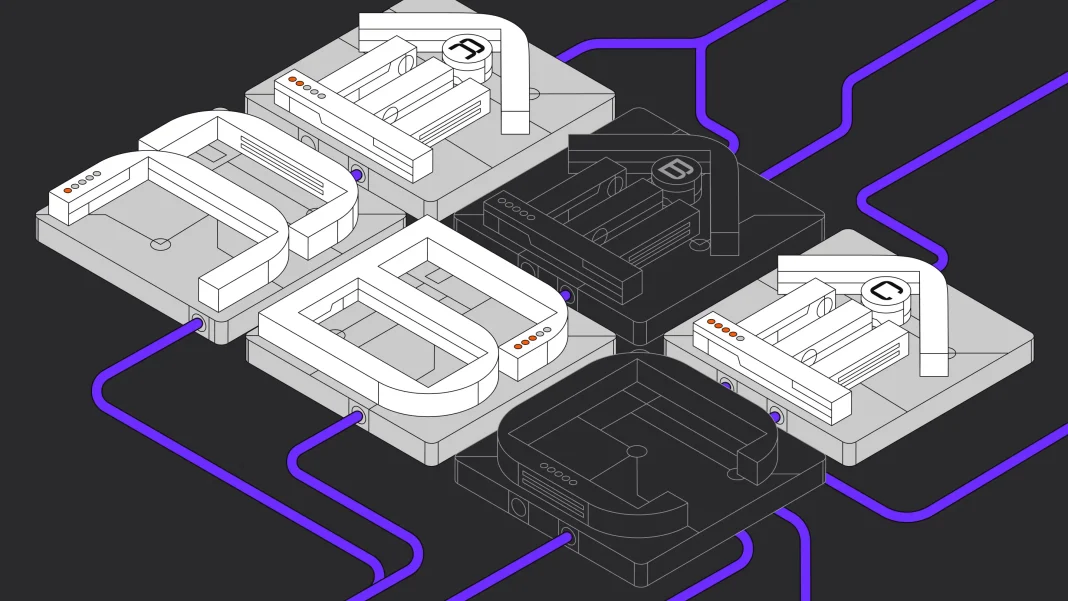
Reaching four nines of uptime is not about a single technology or vendor. It is the outcome of layered design. Financial platforms achieve this by eliminating single points of failure across compute, storage, networking, and power.
Systems are deployed across multiple data centers or availability zones, with traffic intelligently routed to healthy components. Failover is automated and tested regularly, ensuring that recovery does not depend on manual intervention during an incident. Storage systems replicate data continuously, preserving integrity even when individual components fail.
This approach treats failure as inevitable and plans for it proactively. In financial environments, resilience is built into the system’s DNA rather than handled as an exception.
Infrastructure Reliability as a Trust Signal
For banks and fintechs, infrastructure choices send a signal to partners and regulators. Hosting environments that are designed for resilience demonstrate seriousness about operational risk. This is why many financial platforms partner with providers experienced in regulated, high-availability workloads, such as Atlantic.Net, whose infrastructure models are built around redundancy, compliance, and continuous uptime.
Such providers do more than supply servers. They offer environments where availability targets are supported by physical data center design, network diversity, and around-the-clock operational oversight.
The Relationship Between Uptime and Security
Availability and security are often discussed separately, but in financial systems they are deeply connected. Denial-of-service attacks, infrastructure failures, and misconfigurations can all result in outages. As a result, high uptime demands strong security controls at the network and application layers.
Financial platforms invest heavily in monitoring and threat mitigation to ensure that malicious activity does not disrupt service. Traffic filtering, rate limiting, and real-time anomaly detection are deployed not only to protect data, but to preserve availability itself.
In this context, uptime is a security outcome as much as an operational one.
Customer Experience in an Always-On Economy
Modern financial users expect continuous access. Payroll runs overnight, international transfers occur across borders, and digital wallets are used at any hour. There is no longer a concept of “business hours” in finance.
This reality places pressure on infrastructure to perform consistently under varying load conditions. Peaks are not limited to predictable windows; they can occur during market volatility, regional events, or viral growth moments. Systems must absorb these fluctuations without degradation.
High uptime ensures that customer experience remains stable regardless of external conditions, reinforcing confidence in the platform.
Operational Resilience as a Competitive Advantage
As financial markets become more crowded, reliability differentiates serious platforms from the rest. Organizations that consistently meet high availability standards are more likely to win enterprise clients, secure banking partnerships, and expand into regulated markets.
From an executive standpoint, investing in uptime reduces long-term risk. It shortens incident response cycles, simplifies regulatory conversations, and protects brand equity. While achieving 99.99% uptime requires sustained investment, the cost of failing to do so is often far higher.
Conclusion
For financial platforms, 99.99% uptime is not about technical prestige. It is about responsibility. Money is a foundational element of modern life, and the systems that move it must operate with exceptional reliability.
By demanding near-continuous availability, banks and fintechs acknowledge the trust placed in them by users, partners, and regulators. Infrastructure that meets this standard does more than keep systems online. It upholds confidence in the financial system itself, ensuring that digital finance remains dependable in an increasingly interconnected world.