
Growing potatoes at home can be a rewarding experience. Here’s a step-by-step guide on how to grow potatoes:
Choose Potato Varieties: Select the potato varieties you want to grow. Consider factors such as your climate, available space, and preferred taste. Common varieties include Russet, Yukon Gold, Red Pontiac, and Fingerling.
Prepare Seed Potatoes: Start with certified disease-free seed potatoes, which can be purchased from garden centers or online. Cut larger seed potatoes into smaller pieces, ensuring each piece has at least one “eye” or bud. Allow the cut pieces to dry and form a protective callus for a day or two before planting.
Prepare the Planting Area: Select a sunny location in your garden or yard. Ensure the soil is loose, well-draining, and rich in organic matter. Remove any rocks, weeds, or debris from the area.
Planting Potatoes: Dig furrows or trenches about 4-6 inches (10-15 cm) deep and space them about 2-3 feet (60-90 cm) apart. Place the seed potatoes into the furrows with the cut side down and the eye or bud facing up. Space them about 12-15 inches (30-38 cm) apart. Cover the seed potatoes with soil, forming mounds or ridges about 4-6 inches (10-15 cm) high.
Watering and Care: After planting, water the potatoes thoroughly. Keep the soil consistently moist but not waterlogged throughout the growing season. As the plants grow, continue to mound soil or mulch around the stems, covering the lower leaves. This promotes the development of more tubers and prevents them from being exposed to sunlight, which can turn them green and make them inedible.
Fertilization: Potatoes benefit from regular fertilization. Apply a balanced fertilizer or compost when planting and side dress with additional fertilizer or compost as the plants grow. Follow the recommended application rates for your specific fertilizer or compost.
Pest and Disease Control: Keep an eye out for common potato pests and diseases such as potato beetles, aphids, late blight, or early blight. Monitor your plants regularly, remove any affected leaves or insects, and consider using organic pest control methods if needed.
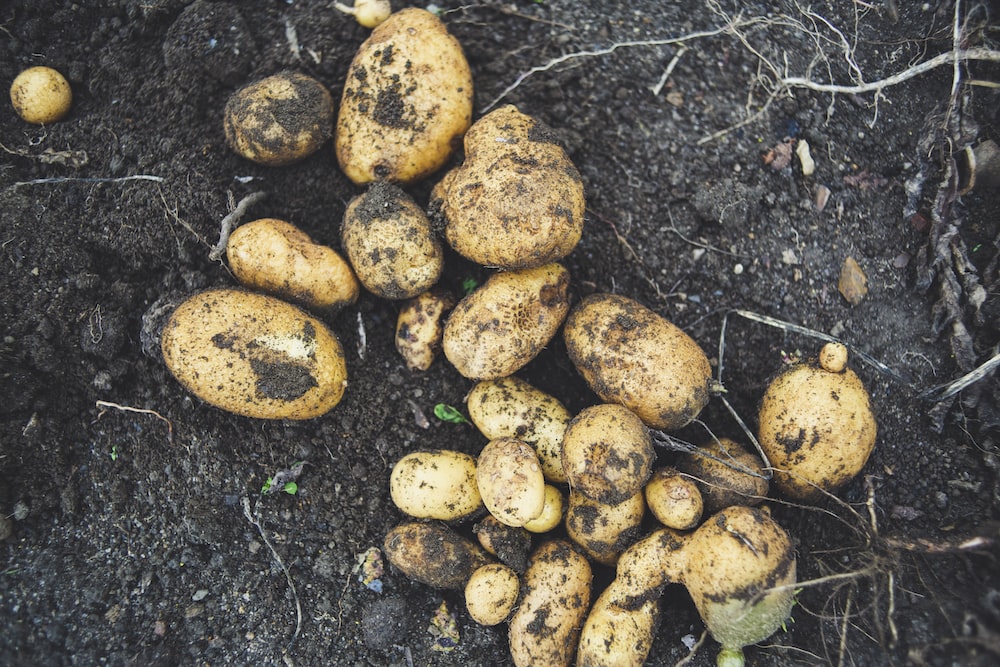
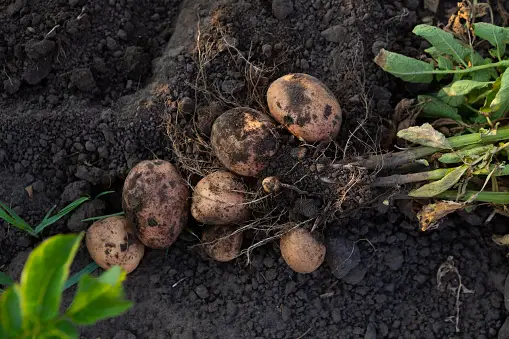
Harvesting: Harvest time varies depending on the potato variety and your desired size. New potatoes can be harvested when the plants start flowering, about 10-12 weeks after planting. For mature potatoes, wait until the foliage turns yellow and dies back, usually around 14-16 weeks after planting. Carefully dig around the plants with a garden fork, being cautious not to damage the tubers. Harvest and store the potatoes in a cool, dark, and dry place.
Growing potatoes can be a fun and rewarding endeavor. Enjoy the process and the delicious homegrown potatoes you’ll have at the end.